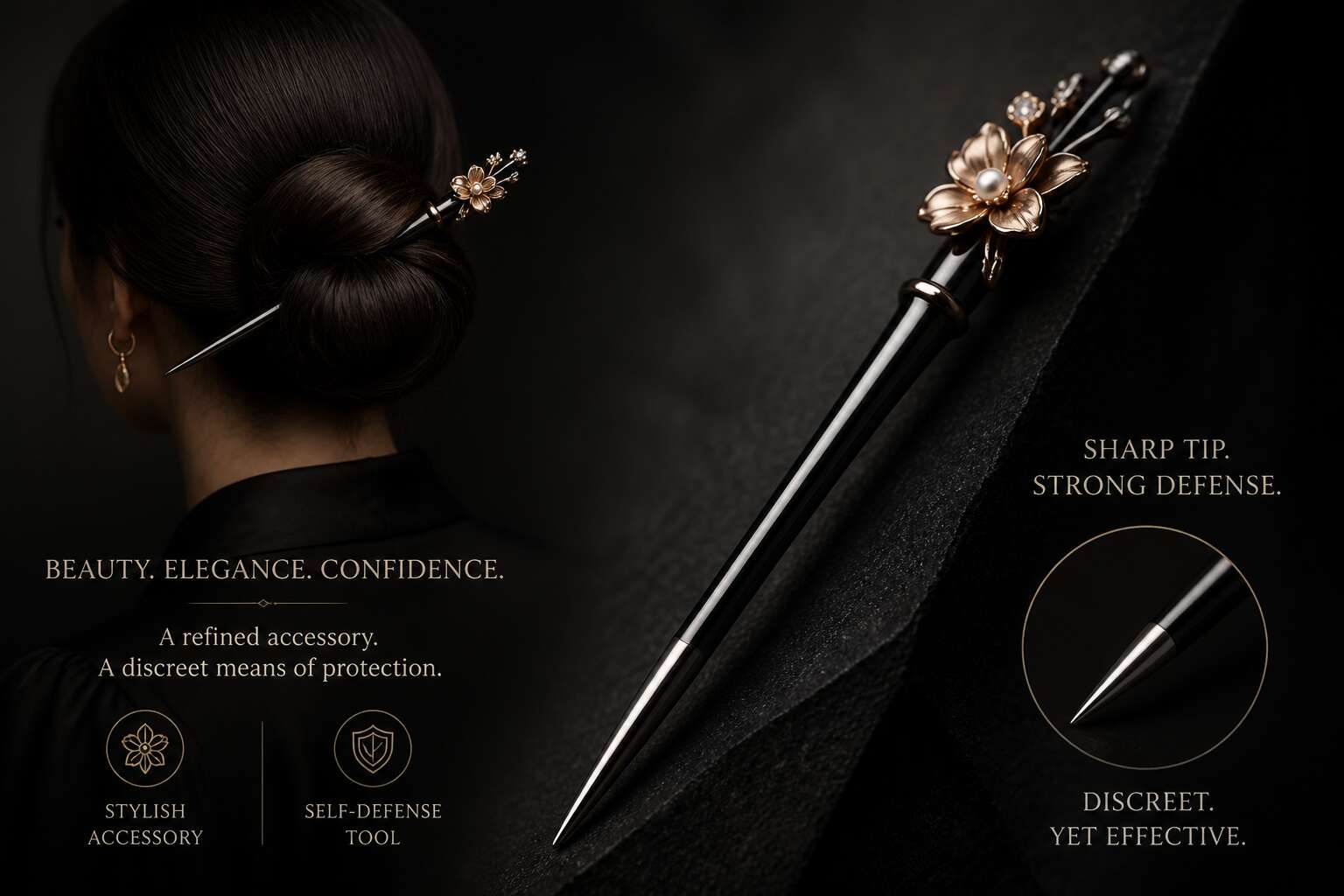
Understanding Self-Defense Hair Pins
The daily commute in South Africa is a reality that requires constant awareness. From the minibus taxi to the quiet parking garage, a sense of personal security is paramount. For many women, this has sparked a search for tools that are both discreet and effective. This is where a simple item from your grooming kit can transform into a last-resort option. The practical utility of self defense hair pins is a topic that deserves more attention than it typically receives.
These aren’t the flimsy metal slides you might use for a casual updo. We are talking about sturdy, sharp-pointed hair accessories designed with dual functionality in mind. The best options are often made from hardened steel with a protective coating. They feature a sharp tip capable of piercing thick fabrics, yet they remain comfortable and secure for all-day wear. Their brilliance lies in their camouflage; nobody looks twice at a woman adjusting her bun.
Consider the physical mechanics of a surprise attack. An assailant often grabs from behind or the side, intending to overpower through sheer strength. In that confined space, swinging a large weapon is impossible. However, a swift, targeted jab to a sensitive area—the hand, the thigh, or the neck—can create the vital seconds needed to break free and run. The element of surprise is entirely on your side.
Here are a few features to specifically look for when selecting your concealed companion:
– The pointed end must be exceptionally sharp, not just decorative.
– The material should be rigid enough to withstand pressure without bending.
– The design should allow for a firm grip, even with sweaty hands.
– The length should be substantial, typically over three inches, to ensure penetration.
Of course, awareness of the legal landscape is essential. South African law views these items through the lens of intent. A hairpin used as a grooming tool is perfectly legal. The moment it is wielded as a weapon, the context shifts. It falls under the category of a potential dangerous object, and the onus is on you to prove self-defense. Therefore, carrying one requires a clear understanding of your rights and responsibilities. It is not a license for aggression; it is a shield for survival.
Ultimately, this is about layered preparedness. Reliance on a single tool is a common fallacy. The self defense hair pins are one layer, but situational awareness is the first and most crucial layer. Your intuition, your ability to maintain distance, and your knowledge of your surroundings are the true first line of defense. The pin is simply a backup, a silent equalizer tucked neatly into your hair, ready to assist in a moment of absolute necessity.
Selecting the Ideal Defensive Hair Pin
Mastering Self-Defense Techniques with Hair Pins
Picture this: you are waiting for a late shift taxi in Joburg, the streetlights are flickering, and your hand instinctively moves to your hair. That sleek accessory holding your bun in place is more than a fashion statement. Self defense hair pins are engineered for discreet protection, designed for the realities of urban life where awareness is your first shield and a backup plan is non-negotiable.
These aren’t your grandmother’s bobby pins. Modern versions are crafted from hardened aircraft-grade steel, featuring a sharpened tip and a reinforced body that can withstand significant pressure without bending. Whether you are a student walking across campus or a professional heading to a parking garage, carrying a visible weapon can be impractical. This tool offers a covert alternative, easily concealed within a stylish updo or a sleek ponytail, ensuring you are never truly unarmed.
The beauty of this system lies in its simplicity and versatility. It transforms a daily grooming ritual into a tactical readiness routine. Consider the various ways this single item can serve you:
– A defensive strike against an attacker’s face, neck, or hands
– A glass breaker in an emergency vehicle escape
– A precise cutting tool for rope or seatbelt entrapment
– A reliable aid for opening taped packages or stubborn locks
But the true value is psychological. In South Africa, where personal safety requires constant vigilance, knowing you possess a functional tool provides a certain peace of mind. It is not about paranoia; it is about preparedness. Mastering the grip and a few basic movements takes minutes, yet the confidence it builds lasts for hours. Self defense hair pins bridge the gap between looking polished and being ready, proving that practical protection can be both elegant and effective.
Maintenance, Care, and Legal Responsibility
Owning self defense hair pins in South Africa carries a weight many overlook. The law treats them as weapons, not accessories. You must store them securely and carry them with discretion, especially in public spaces where a sudden search could invite scrutiny.
Maintenance is straightforward but essential. Wipe the pins dry after exposure to humidity, because coastal air can corrode the steel quickly. Check the tips for dullness or rust every few weeks.
- Clean with a soft cloth and light oil
- Test the grip mechanism regularly
- Inspect for bends or cracks after any impact
Legal responsibility begins with understanding municipal bylaws. A pin in your handbag raises questions. Use it only when escape is impossible, and always report any defensive incident to the SAPS. That simple record protects you later.




0 Comments