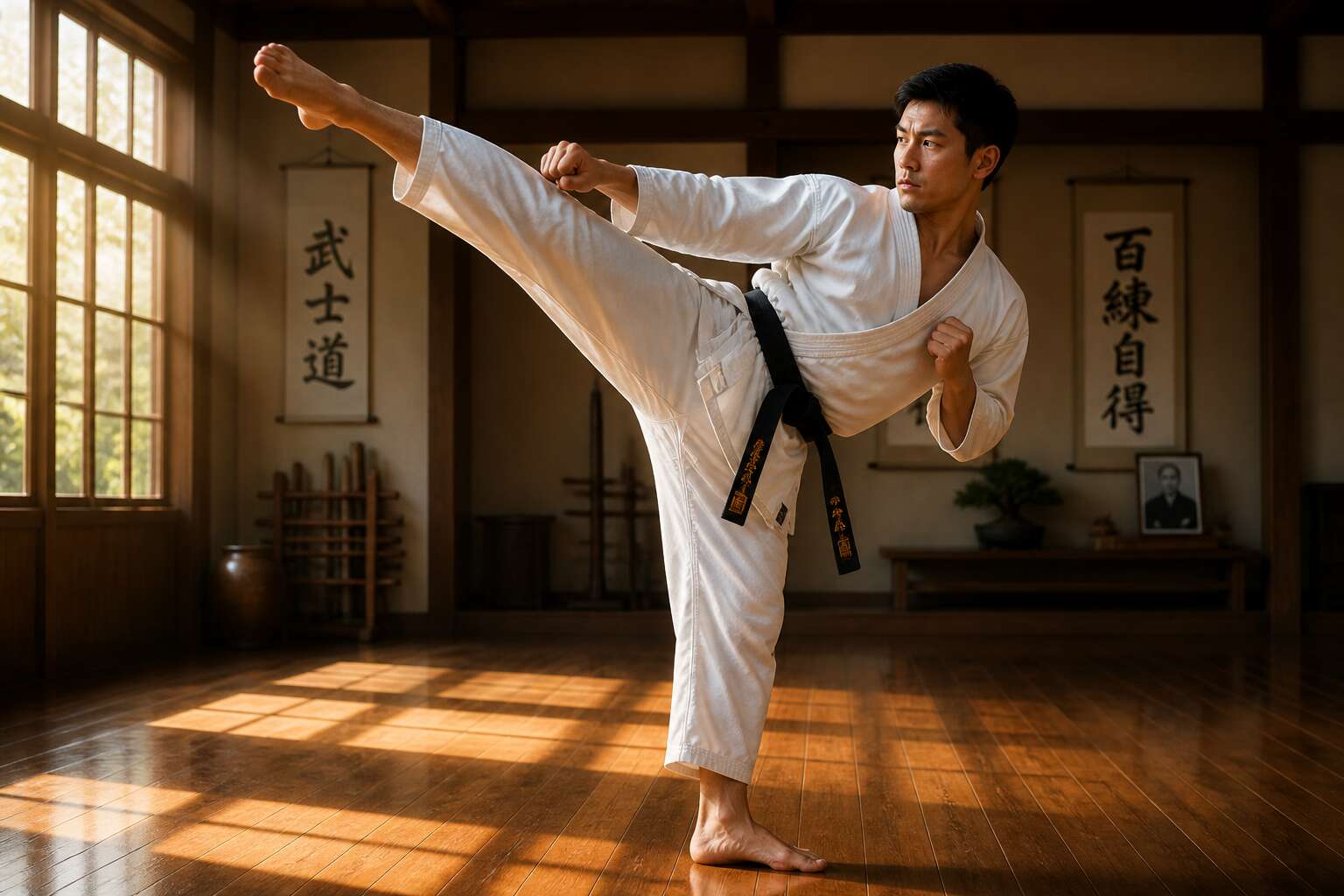
The Fundamentals of Karate for Personal Safety
Defining Karate and Its Core Principles
Karate is frequently reduced to flashy kicks, yet its true foundation lies in practical self defense. For South Africans navigating urban risks, the discipline offers more than physical technique. It builds situational awareness and calm under pressure.
The core principles of karate are simple: posture, timing, and distance. These form the bedrock of any defensive encounter. A practitioner learns to control breathing and react decisively. This is why self defense like karate appeals to those who want structured training rather than improvisation.
Here are the essential pillars:
– Focus on evasion before engagement
– Use of natural weapons efficiently
– Maintaining balance under stress
These principles transform abstract theory into repeatable actions. I’ve seen karate drills turn them into instinctive reflexes!
Physical Conditioning for Defense
Most altercations last under ten seconds. Physical conditioning decides who stays effective for that duration. Karate training builds the cardiovascular endurance to sustain explosive movement when adrenaline floods the system. I have watched newcomers exhaust themselves in the first minute of sparring because their lungs gave out before their technique did.
Conditioning in karate targets specific defensive attributes:
- Hip mobility for stable stance transitions
- Forearm and shin density for blocking and deflection
- Core stability for generating power from the ground
South Africans often overestimate the value of gym bulk. Karate conditions functional capacity instead. The body becomes leaner, more resilient, and quicker to respond without conscious thought. If you are considering self defense like karate, this physical preparation alone offers a compelling return.
Essential Self-Defense Techniques Derived from Karate
Strikes and Blocks for Real-World Situations
In South Africa, a trip to the local spaza shop can turn hostile in seconds. Complex grappling is often a luxury you cannot afford. Self defense like karate offers a simpler answer. The linear efficiency of a well-executed reverse punch capitalizes on a target’s forward momentum, stopping a threat before it closes the distance. Blocks such as the downward forearm block are not passive shields. They are redirecting tools that disrupt an attacker’s arm, creating a window for a counter.
Street encounters rarely follow a script. A grab from behind or a swinging fist in a parking lot is common. Self defense like karate lies in its economy of motion. You use what you have. These responses translate directly:
- The knife-hand strike to the neck or collarbone.
- The front kick aimed at the shin to break a stance.
- The X-block to defend against a downward bottle attack.
What sets this apart is the reliance on gross motor skills. Under stress, fine motor control deteriorates quickly. Karate’s simple, linear angles survive that panic. Repetition makes these movements reflexive.
Footwork and Evasion Strategies
Seventy-three percent of street attacks start inside arm’s reach. That statistic from the South African Police Service should make you value your feet. Footwork in self defense like karate is the art of relocation. The natural stance, weight on the back leg, allows a lateral slide when a fist closes in.
Evasion means a half step off the attacker’s line. The front foot pivots, hips rotate, the body shifts from the original angle. The angled step from katas converts a linear threat into an open angle for a counter.
- The sliding step forward closes distance without telegraphing.
- The back step pulls the body out of a hook punch’s arc.
- The cross step sets up a throw if the attacker overreaches.
This footwork becomes reflexive. Under adrenaline, you will not calculate. You will move. And in self defense like karate, that movement earns you a second chance to complain about load shedding.
Close-Quarter Encounters and Escapes
Close quarter work removes all ceremony. When a hand grips your collar, the formal distance collapses. In self defense like karate, the hikite, the pulling hand, becomes a mechanical wedge. It breaks the grip at the thumb while the other hand pins the wrist. That is the mechanics of escape.
The sequence demands pressure, not speed. Rotate the hips and drop the shoulder line. The elbow finds the inside line. A short vertical fist to the jaw needs no windup. It needs proximity and bone alignment.
These engagements reveal something about fear. Fear freezes the lungs. The body wants to push straight back, which is exactly where the attacker wants you. Instead, step diagonally. Angle the spine. Trade distance for control.
Close range drills commit these positions to muscle memory:
- Keep elbows bent, forearms vertical
- Clench the rear hand near the jaw
- Move hips before shoulders
- Exhale through the technique
Self defense like karate lives in this compressed space, where intention overrides reach.
Using Karate Katas as Practical Training
Beneath the slow, deliberate forms of karate katas lies a practical system for survival. In South Africa, where threat arrives without warning, self defense like karate transforms these ancient sequences into functional reflex. Katas are not empty ritual; they are movement studies in confinement, balance, and release.
The embusen, the directional path, teaches one to step at an angle while striking. A pivot becomes a hip throw in miniature. A chambered fist hides a close-range elbow. Each motion has a combat application, yet it only emerges through persistent drill.
- Trace every hand position for grip breaks or blocks.
- Map each stance change to a weight shift against a push.
- Seek the simultaneous defense and counter in each transition.
This perspective offers genuine power. The kata becomes a coherent method when read with intention.
Comparing Karate with Other Martial Arts for Self-Defense
Karate vs. Taekwondo
According to a recent SAPS report, most assaults occur within an arm’s reach. This fact shapes how we evaluate self-defense systems. Taekwondo dazzles with spinning head kicks, yet karate focuses on economical, direct responses. Taekwondo’s high stance demands open space! Karate’s low, rooted stances and linear hip rotation work when you are backed into a corner. For anyone serious about self defense like karate, close-range power becomes non-negotiable. A taekwondo roundhouse scores points in sport, but loses agency on a slippery sidewalk. A karate side thrust keeps your center low and elbows protected.
Consider the core differences:
- Taekwondo: aerial and spinning techniques, requiring clearance.
- Karate: short, snapping strikes, optimized for contact distances.
The terrain in South African cities, from loose gravel to narrow passageways, favors the latter. When you train for a street scenario, self defense like karate gives you a template that does not break down under pressure.
Karate vs. Krav Maga
Krav Maga emerged from Israeli military protocols. It favors preemptive strikes and extreme urgency. Karate was shaped by civilian contexts, emphasizing distance and body mechanics. For someone in Durban, self defense like karate offers a measured response that holds up without a training partner wearing a protective suit.
Krav Maga teaches you to attack the eyes, throat, and groin without hesitation. Karate develops rooted stances and hip rotation, which let you absorb contact and answer with a single thrust. The training assumptions differ:
- Krav Maga assumes multiple attackers and unavoidable violence.
- Karate assumes you control a close-range threat before it escalates.
Both systems work. The choice depends on your physical profile and your tolerance for risk.
Choosing the Right Art for Your Needs
Violence here rarely announces itself. It comes from a doorway, from a queue, from a face that looked away too long. In that moment, self defense like karate offers a framework that does not depend on a referee or a ring. Muay Thai builds devastating limb weapons, but that power leans on a certain physical confidence. A grappler learns control on the mat, yet the pavement does not cushion a fall.
Karate approaches the dark differently. It teaches you to hold distance, to read the twitch in a shoulder before the hand moves. The deep stances and hip rotation are not ceremony; they generate force from stillness.
The choice narrows to a few realities:
- Your joints, age, and natural movement
- The threat: one attacker or several, open street or tight corridor
- The hours you can honestly give to practice
The Importance of Cross-Training
Every style leaves a scar on the fighter. Karate builds a wall of distance. Jiu-jitsu teaches you to breathe inside the crush. Boxing sharpens the angle of escape. None of them cover every shadow. The street asks questions no single art can answer.
Consider the pavement meeting your back. A striker trained only for standing combat loses the plot. A grappler pulls an attacker into the ground where friends can kick a skull. This is why cross-training matters. A little judo for falling. A little Muay Thai for the clinch. A little karate for the first two seconds of violence.
- Adapt the stance to the threat
- Drill the transitions between ranges
- Let the weaknesses of one system teach the strengths of another
Self defense like karate gives you the foundation. Build on it with what your body and your streets demand. The response must move from stillness to action without thinking, and that only comes from layering skills until they become one reflex.
Building an Effective Self-Defense Mindset with Karate
Situational Awareness and Avoidance
Most fights start before the first punch lands. In South Africa, urban crime is a reality, so your greatest weapon is awareness. Self defense like karate trains a state of readiness that begins in the mind. You learn to read a room, assess body language, and trust your instincts when something feels off. I have seen this truth transform students.
Situational awareness means knowing your exits, surroundings, and limits. Avoidance is not cowardice. It is a strategy. When you practice self defense like karate, you drill discrete habits:
- Scan entrances and blind spots
- Keep a hand free in crowded areas
- Maintain a relaxed but alert posture
These habits become instinctive. Avoidance is the highest form of defense. If you can walk away from a threat, you have already won the encounter. The karate mindset prioritizes survival over ego. That shift separates prepared practitioners from those who freeze in a crisis.
Confidence and Stress Management
The adrenal dump from a sudden threat lasts about 90 seconds. In that window, fine motor skills degrade and vision tunnels. Practicing self defense like karate recalibrates that response. You learn to control your breathing and move while your heart hammers.
Karate confidence is not swagger. It is the calm from drilling scenarios until your body knows the answer before your brain catches up. Stress management comes from sparring, where you get hit, reset, and get hit again.
Training builds tolerance for chaos:
- Controlled breathing under physical pressure
- Rehearsing response to a surprise attack
- Maintaining eye contact without escalating
That composure changes how you carry yourself. A prepared posture signals you are not a soft target. The mindset is the real weapon. The technique is just delivery.
Legal and Ethical Considerations of Using Force
In South Africa, self defense like karate is not a license to strike first. The law demands proportionality. I have seen students forget this. Your training must build a mindset that calculates force before delivering it. Karate’s repeated drills teach you to control impact, to stop a technique mid-flight. That motor control is legal protection. When facing a threat, your response must match the danger. Excessive force turns a victim into a defendant.
Ethical considerations run deeper. Sparring reveals your instincts. You learn to differentiate a lethal attack from a shove. An effective mindset includes restraint and environmental awareness. The court will examine your choices, not your reflexes. To internalize this, focus on these principles:
- Assess the threat’s immediacy and intent
- Use force only to escape, not to punish
- Disengage the moment the threat ends
That list grounds your training in reality. Self defense like karate gives you the tools. Legal and ethical judgment defines the outcome.
Routine Practice and Skill Retention
Routine practice in self defense like karate creates a mental architecture that operates before conscious thought. The repetition of basics, the endless drilling of stances and strikes, builds cognitive anchors. When pressure arrives, your mind does not negotiate with fear. It defaults to what the body knows.
Skill retention depends on how you practice, not how long. Spaced repetition matters more than marathon sessions. A student who trains fifteen focused minutes daily retains more than one who spends three hours once a week. I have seen this pattern hold across years of teaching.
- Practice with intent, not autopilot
- Visualize scenarios between sessions
- Review techniques after each class
This is where self defense like karate separates from mere exercise. The routine rewires decision making.
Guidance for Beginners: Getting Started with Karate for Self-Defense
Finding a Reputable Dojo and Instructor
South Africa’s crime statistics are sobering, yet the right dojo changes everything. Your journey into self defense like karate begins with a search for the right place to train. Look for a school that emphasizes practical application over trophy collecting. Observe a class before you commit. Watch how the instructor corrects mistakes.
A reputable instructor holds legitimate rank, but more importantly, they can explain why a technique works in a street scenario. They should also enforce safety rules during sparring. When you visit a potential dojo, ask about their class schedule and insurance coverage.
- Ask to watch a live session
- Request a free trial class
- Check the instructor’s teaching credentials
Your first week is about building trust. The right environment will push you, but never humiliate you. That distinction shapes your entire journey!
Essential Gear and Equipment
The most common mistake beginners make isn’t their stance. It’s their equipment. For self defense like karate, your kit determines how long you last in training. I’ve seen people wear running shoes to a barefoot class. They last five minutes. Your knuckles and shins need protection. Here is what you actually need:
- Hand wraps to protect your wrists
- A mouthguard for sparring
- Groin and chest protection
- Lightweight gloves for pad work
Your dojo can recommend local shops. Avoid second-hand mouthguards. A basic gi is fine, but check if your school requires one. I’ve trained in old T-shirts and track pants without issue. The point is to start safely, not to look like a catalogue model. Focus on gear that fits snugly and allows movement. This saves you money and injury. Comfort is more important than brand names.
Setting Realistic Goals and Expectations
Starting karate for self defense like karate takes patience, and I’ve seen beginners quit after one month because they expected instant results. Real progress comes from small, consistent wins! First, learn to stand correctly. Next, practice one strike until it feels instinctive.
Set a goal to attend two classes weekly for three months. Track your ability to stay calm during drills. Celebrate when you remember a sequence without prompting. Also define why you train. Is it fitness, confidence, or practical protection? Your answer shapes your focus. Sparring earlier than you feel ready often backfires.
Instead, ask your instructor for feedback every few sessions. Adjust expectations based on your schedule and body. This approach keeps you engaged and improves retention naturally. Every expert once struggled with basics. Your journey is unique, so measure progress against yourself, not others.



0 Comments