
The Core Mindset of Personal Safety
In South Africa, opportunity and desperation decide who becomes a victim. The violent crime rate is among the highest on Earth, yet most residents walk with their minds elsewhere. That is the true vulnerability. A mugger fears your attention more than your strength.
Self defense 101 begins with situational awareness, not physical technique. Train your mind to read the subtle currents of a space. Who is watching you? Who moves with purpose in your direction? I have learned to trust that pang of unease; it is your brain registering data you have not yet consciously processed!
Your security posture rests on three interlocking principles:
- Preemption: act before a threat condenses.
- Proxemics: manage distance from unknown persons.
- De-escalation: use measured language to buy time.
Criminals follow predictable patterns. They test boundaries and exploit politeness. Make yourself a hard target through environmental scanning. That is the essence of self defense 101.
Essential Physical Defense Skills
When danger erupts, your body reacts before your mind catches up. That primal response can save you, but only if you train it correctly. Self defense 101 begins with understanding that your physical tools are simple. You have elbows, knees, palms, and feet. You do not need to be a martial artist to survive a street encounter in Johannesburg or Cape Town.
Your core stance is your first line of defense. Keep your feet shoulder width apart, knees slightly bent, and hands up. This posture creates a stable base. It allows you to move quickly in any direction. From here, you can execute several critical techniques without complex footwork.
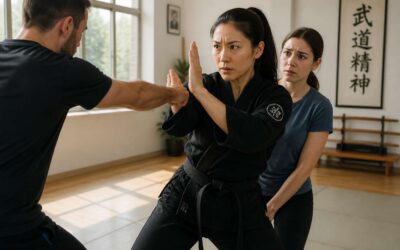
1. Palms strike to the nose or chin to stun an attacker.
2. Knee strikes to the groin to create space.
3. Elbow strikes to the temple or jaw, which are devastating even with limited force.
These moves rely on gross motor skills, actions that work under adrenaline. Fine motor skills, like precise finger movements, fail you in a crisis. Practice these strikes until they are muscle memory. Your goal is not to fight longer, but to escape faster. A split second of disorientation is all you need to run, shout, or draw attention. Physical defense is a blunt instrument, not a fine art. It is about survival, and it is brutally effective.
Environmental and Situational Strategies
Every seven hours, a South African becomes the victim of a violent crime in their own home. But the true battlefield begins long before a door splinters. Environmental and situational strategies form the invisible architecture of your safety, a silent choreography of awareness that shifts the odds before a physical confrontation ever materializes.
You learn to notice things. The unfamiliar car idling on a quiet street. The way a security gate feels heavier after maintenance work. This awareness is not paranoid. It is a conversation with your environment, where you listen for the notes that feel off-key.
Consider the immediate benefits of proactive avoidance:
– Maintain clear sightlines by trimming overgrown shrubs near entrances
– Vary your daily routes and routines to avoid predictable patterns
– Install motion-sensing lights that flood dark corners with illumination
– Park in well-lit areas facing outward for a quick exit
This is self defense 101 in its purest form, a foundational chapter where prevention outranks reaction. Your presence in any space should be deliberate, not accidental. When you walk through a parking lot, your posture should announce that you are observant and ready.
Creating a personal buffer zone means giving yourself time. Time to assess, to decide, to move. The criminal seeks the path of least resistance, the soft target. By hardening the environment around you and feeding it with your attention, you become a difficult equation. You reclaim the ground beneath your feet, turning public spaces into a stage where you are the director, not the bystander. That is the quiet magic of environmental mastery.
De-escalation and Verbal Defense
Most people picture a physical struggle when they think about self defense 101. The reality is that your most powerful weapon is often your voice. A well-timed word can neutralize a threat before a hand is ever raised. Verbal defense is about controlling the emotional temperature of a situation. It is a skill that requires practice, and very few people have mastered it.
The first step is to put space between your emotions and your reaction. When someone steps into your personal space, your body floods with adrenaline. This chemical reaction makes it difficult to form coherent thoughts. You need a script to fall back on. A calm tone of voice can be more disarming than a raised one. It signals that you are not an easy target. Speak in short phrases and get straight to the point.
The goal is to disrupt the aggressor’s narrative. Here are a few verbal plays for your mental playbook:
Avoid pleading or bargaining for your safety. This often encourages a predator. Instead, you are projecting a persona of controlled strength. Remember that local context matters. In South Africa, understanding the social dynamics of your environment is crucial. A phrase that works in Sandton might escalate a situation in Alkmaar. The most valuable part of any self defense 101 course is learning to read people. That includes reading the pauses in a verbal exchange as much as the words themselves.
Ultimately, your voice is a tool for creating distance. You are not trying to win an argument. You are trying to win time and space to escape. Managing the space between you and the threat is the true objective. If talking fails, physical tactics become the necessary alternative, but avoid that outcome at all costs. The art of talking your way out of a dark alley is the highest form of self defense 101.
Post-Incident Recovery and Legal Awareness
The moment the threat ends, a different battle begins. Your body floods with adrenaline, then crashes into exhaustion and shock. This physical aftermath is only half the story. The legal landscape that follows a defensive encounter is equally demanding, shaping everything that happens next.
Your memory will fragment. Time will feel distorted. These are normal neurological responses, not signs of weakness. In the hours after an incident, your actions matter as much as those during the confrontation itself. The police will ask for your statement while you are still processing the event.
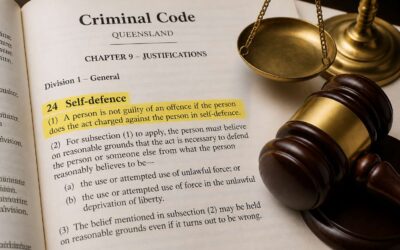
The law in South Africa permits force when your life is in immediate danger. That right carries responsibilities. Your account must be clear and consistent. What you say becomes evidence.
– Report the incident to SAPS as soon as possible.
– Write down everything you remember, even if it seems insignificant.
– Ask for medical attention, documenting every injury.
– Contact a legal professional before making any further statements.
Understanding the Criminal Procedure Act is not optional for anyone studying self defense 101. Preparation includes knowing your legal obligations, not just your physical techniques. The aftermath tests your resolve, your memory, and your understanding of the law.


0 Comments