Why a Single Punch Should Be Your Last Resort
Understanding the Legal Implications of Defensive Strikes
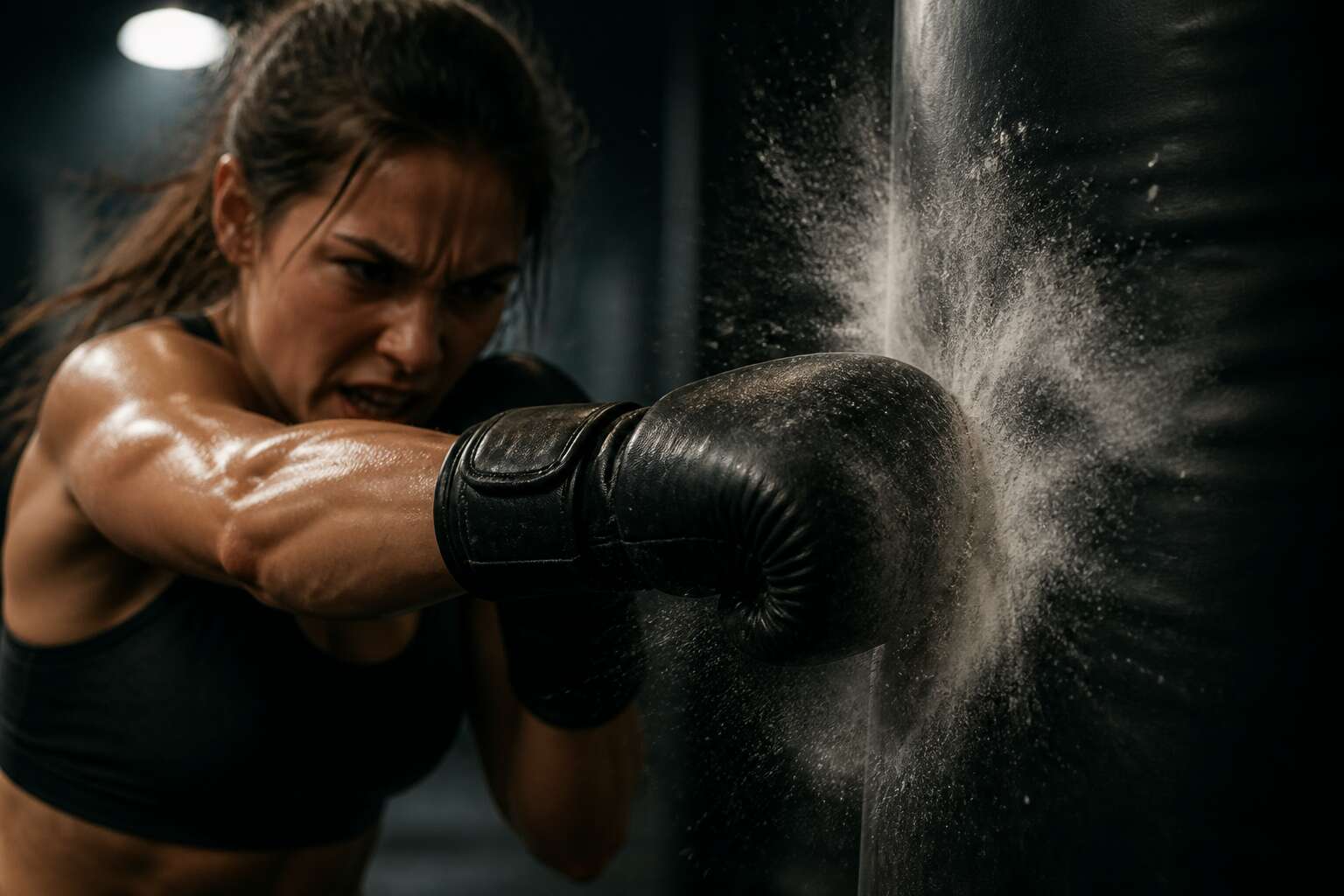
One punch can kill. In South Africa, a defensive strike requires legal justification. The law asks three questions: necessity, proportionality, and imminence. A self defence punch that fails these tests becomes assault. That is why it must remain your last resort.
I have witnessed court cases where genuine fear did not excuse an unlawful strike. The legal system examines your actions, not your anxiety. Consider these principles before you act:
- Reasonable force means the minimum required to stop the threat.
- Striking after the attacker retreats is retaliation, not self defence.
- A clear path to escape must be used if available.
Your self defence punch could save your life, yet the same strike could end your freedom. Respect the law. It will respect your restraint!
Distinguishing Between Sport Punching and Survival Punching
A single punch ends things. Not rounds, not matches, but lives and futures. In South Africa, the gap between sport and survival striking is intention, environment, and consequence. When your fist lands, the situation leaves your control!
Sport punching operates inside a framework. Weight classes, rounds, and referees create boundaries. The opponent expects the contact. Survival punching has no such framework. Your target does not consent. The ground is uneven and your attacker may be under the influence of substances that dull pain. A sport punch scores points. A self defence punch stops a threat.
- Distance is unpredictable in a crowded space
- Your attacker may wear thick clothing that absorbs impact
- A second threat can appear before your arm returns
That is why the self defence punch must remain your last resort. I have watched sparring partners bounce up from hard shots, only to realise that the street offers no such recovery. When you commit, you lose the ability to negotiate, retreat, or recalibrate. Sport rewards initiative. Survival rewards restraint.
Assessing Threat Levels Before Throwing a Punch
Statistics from the South African Police Service show that most assault cases involve multiple attackers. That sobering fact should shape your decision to throw a self defence punch. A punch is a commitment. Your arm commits you. Your balance commits you. Your attention commits you.
Before you strike, assess. Is the threat closing distance? Are hands visible? Is there an exit behind you? Each answer shifts your calculus.
- One attacker or several?
- Weapon visible or concealed?
- Hard surface or soft ground?
If the numbers are wrong, the punch becomes a liability. The scene does not reset. Your best self defence punch is the one you never need to throw, because you read the room and walked away.
The Psychological Role of a Palm Strike vs a Closed Fist
Your single self defence punch carries consequences you cannot undo. A fist compresses the bones of your hand into a fragile wedge. On a skull, that wedge often breaks. You win the exchange and lose the use of your hand.
Most people miss this: the psychological role of a palm strike vs a closed fist changes the entire encounter. A closed fist announces murderous intent. It spikes the attacker’s adrenaline and willingness to escalate. A palm strike reads as a violent push. It creates space without that trigger.
- A palm strike preserves your metacarpals
- It keeps your wrist in a natural line
- It does not telegraph intent
On a quiet Johannesburg street, I heard that crack and watched a man’s hand go limp before his punch landed! We call it a self defence punch because it ends things. That is why a single punch must be your last resort.
Core Mechanics for a Powerful Defensive Strike
Building a Solid Fighting Stance for Balance and Mobility
Your feet anchor every self defence punch. Without a stable base, power evaporates the instant you move. A solid fighting stance starts with feet shoulder width apart, knees bent, and weight spread. Rigid shoulders ruin mobility. Keep your hands up, but relax your neck.
Balance and mobility depend on each other. Plant your feet too wide, and you lose the ability to shift. Too narrow, and you topple. A dynamic stance, where your rear heel lifts slightly, lets your hips rotate fully. This transfers energy from the ground through your torso into your fist.
For a defensive strike, keep these mechanics in mind:
- Tuck your chin behind your lead shoulder.
- Exhale sharply as you extend your arm.
- Return your hand to guard instantly.
Practice this stance against a bag. Your self defence punch only lands if you hold your footing while delivering it. Drill the stance until it feels instinctive.
The Correct Fist Formation to Avoid Injuring Your Hand
Many hand injuries during a defensive encounter happen before the strike lands. The fist is assembled incorrectly, and the wrist collapses on impact. A self defence punch depends on two things: a braced wrist and a focused impact zone. The correct fist formation starts with the thumb folded firmly across the middle fingers. The first two knuckles, those of the index and middle finger, become the striking surface. Keep the wrist straight, not bent upward or downward, so the forearm bones align with the impact point.
- Fold the fingers inward completely, then wrap the thumb over the second and third fingers.
- Align the first two knuckles with the radius bone of the forearm.
- Squeeze the hand at the moment of impact, not before.
Your body transmits force through that aligned structure. If the wrist bends even slightly, energy disperses into the joint instead of the target. That turns a defensive strike into a painful hand injury. Practise the fist formation slowly on a heavy bag before adding speed. A self defence punch is only as safe as the hand that delivers it.
Generating Rotational Force From Your Hips and Shoulders
A punch thrown from the hips hits harder than one thrown from the shoulder. Rotational force drives a self defence punch, and the hips decide its weight. Pivot the rear foot, drive the hip forward, and the torso follows with growing speed. The shoulder completes the arc, transferring momentum into the knuckles. Without this chain, you are pushing with a limb.
Use a mental cue: imagine your belt buckle turning to face the target. This engages the oblique muscles and the glutes. The strike becomes a full body movement.
- Rear foot pivots to open the hip.
- Hip leads the torso into the turn.
- Shoulder trails and snaps the arm through.
This rotation also pulls your body off the centre line, making you a harder target. A self defence punch thrown from still hips is slow and weak. Rotation makes it fast, heavy, and practical.
Breathing Techniques to Maximize Impact and Control
A defensive strike is only as strong as the structure behind it. The hips generate the force, but a bent wrist or a loose shoulder will bleed that energy right off the bones. Landing a clean self defence punch requires a rigid line. Lock the wrist and elbow into a single column, and let the spine act as the shaft. If the vertebrae compress, the power dissipates. Every self defence punch demands perfect alignment, not raw force.
Breathing dictates how much of that force you actually land. Holding your breath creates tension in the diaphragm, which acts like a brake on the torso’s rotation. A sharp exhale, timed to the moment of impact, solves two problems at once. It stabilizes your intra-abdominal pressure, solidifying the spine, and it forces you to keep a rhythmic breathing pattern. That rhythm keeps oxygen flowing, preventing the tunnel vision that often accompanies an adrenaline spike.
High-Percentage Targets to End a Threat Quickly
Why the Nose, Eyes and Throat Are Priority Zones
When seconds matter, aiming for the nose is about physics, not style. A solid self defence punch to the nose forces the eyes to water and disrupts visual tracking, buying you a half second. That is enough time to deliver a more decisive follow up.
The throat is a separate matter. A strike there compresses the airway and triggers a gag reflex that halts forward movement. The eyes respond to rapid motion with an involuntary blink, so a quick upward palm strike destroys their focus entirely.
- The nose bleeds easily and distracts.
- The eyes water and close involuntarily.
- The throat reflex stops an attacker in their tracks.
These zones work because they exploit automatic bodily responses rather than relying on your muscle strength. In a real self defence punch exchange, that is the whole point.
The Temple and Jaw: Risks and Rewards
One telling statistic from violent crime data in South Africa is that most physical altercations end in under ten seconds. This makes the temple and jaw prime candidates for a decisive self defence punch, not because they are glamorous targets, but because they offer a rapid off switch.
A clean strike to the temple can disrupt blood pressure to the brain and cause a loss of balance, while a solid hit to the jaw often forces a temporary discombobulation of the inner ear. The jaw is also a leaker, it splits open easily, which changes an attacker’s aggression into a reaction.
– The temple is vulnerable due to the thinness of the skull at that point.
– The jaw hinge is a mechanical weak point that translates force directly into the vestibular system.
This is about ending an exchange, not styling on someone. You should only throw these when your stance is solid and the line is clear. A misplaced hook to the head risks damage to your hand, so you must commit fully. Choosing these zones over the body saves your energy and creates an immediate stoppage. A single self defence punch to the temple is ethical when you use it to create the space to escape. The reward is time, and the risk is a broken fist, so weigh the geometry before you launch.
Striking the Solar Plexus for Diaphragm Disruption
The solar plexus is a high-percentage target precisely because it ignores an attacker’s muscle mass. A single self defence punch driven upward into this nerve cluster can force a diaphragm spasm, leaving your assailant gasping for air with their hands dropping to their gut. That moment of involuntary paralysis is your opportunity to disengage.
- It is shielded only by the rectus sheath and a thin layer of fat, not bone.
- It sits within reach of a short, compact hook or a straight jab.
- The resulting spasm temporarily inhibits both breathing and voluntary motion.
I have seen students hesitate on body shots because they worry about ribs. The solar plexus avoids that problem entirely. It is soft, central, and devastating when struck with hip rotation. This is not about knockout power; it is about resetting an attacker’s rhythm before they can commit to a follow-up. Keep your fist tight and your line short, and this self defence punch will do the work.
Using Fingertips and Palm Heels for Soft Tissues
The palm heel offers a self defence punch that bypasses the delicate metacarpals. When you strike with the base of your hand, force travels through a broad, dense surface. Fingertips are precision instruments. They target soft, unguarded spaces where tissue yields.
These tools thrive in close quarters. A thrusting palm heel or a fingertip jab to the hollow beneath the jaw can end a confrontation quickly. The targets do not require knockout power. They require accuracy and intent. The soft structures of the neck and face respond immediately to pressure.
- Soft tissue targets ignore an attacker’s physical strength.
- Palm heels reduce your risk of hand injury.
- Fingertip jabs work at extremely close range.
This is how survival works. The self defence punch does not always arrive as a fist. Sometimes it arrives as an open hand, a sharp extension of the arm, a focused push into yielding flesh. In South Africa, where confrontations can be sudden, these targets offer an option when a closed fist feels too fragile.
How to Target an Attacker Wearing Heavy Clothing
The first punch you throw against a padded jacket is a wasted punch. Heavy clothing erases your best targets. The torso absorbs impact. The skull hides beneath a beanie. The self defence punch loses its typical points of impact.
Look below the waist. The knee offers a fixed joint. A strike to its side collapses the support structure regardless of insulation. The shin stays exposed. The instep bears the attacker’s weight. The groin remains unprotected under any garment.
These are the targets I trust when someone wears layers:
1. The side of the knee, struck from an angle.
2. The shin, driven downward.
3. The instep, with a stomp.
4. The groin, with any available tool.
The punch adapts to these zones and avoids the fabric entirely. Aim for the bones and joints beneath the layers.
The Consequences of Hitting the Top of the Skull
The top of the skull is a common first instinct. It is also the worst second mistake! That bone has a curved dome designed to distribute force. A self defence punch against it sends shock waves back into your own hand. Fractures happen in the metacarpals before the skull gives.
The attacker feels a dull bump. You feel a sharp break! High percentage targets reverse that equation. I have seen fighters lose use of a hand on this exact target. They accept the punch and transfer its energy into the body’s vulnerable structures. Softer zones fold. Fixed joints fail. The goal stays maximum transfer of energy.
Training Drills That Build Realistic Punching Skills
Shadow Boxing for Footwork and Distance Management
In South Africa, chaos can appear from a taxi rank or a quiet pavement. Your body must respond before your mind formulates an answer. Shadow boxing, practised with intent, trains the coordination between your feet and fists.
In each session, I imagine a lunge aimed at my throat. I step offline while throwing a short cross. Pivot your back foot to recycle energy! The goal is to manage distance without conscious thought, because position dictates everything here.
- Drill one: circle the pocket, throw a jab, exit backward.
- Drill two: slip a hook, angle left, fire a rear uppercut.
- Drill three: press forward with parries, then burst away.
Practise until your footwork feels automatic. Erase the gap or widen it at will. Only then does a self defence punch become a reflex, not a decision.
Heavy Bag Work to Develop Endurance and Bone Conditioning
Heavy bag work simulates landing a self defence punch on a resisting body. The bag does not flinch. It does not call for a break. It simply absorbs what you give and returns the weight of your own efforts.
Endurance matters in a survival situation. Adrenaline burns through reserves fast. Bone conditioning follows naturally from repeated impact. Each strike stimulates the small bones of the hand to adapt, reducing your risk of fracture when a self defence punch lands on a hard surface.
A simple heavy bag session looks like this:
- Warm up with light jabs for two minutes.
- Throw straight crosses at moderate power for one minute.
- Finish with thirty seconds of rapid combinations.
Between rounds, the body recovers while the hands adjust to the strain. Wrist alignment and breathing patterns carry over from the gym to the street. Fatigue in the final round mirrors what a real encounter demands.
Partner Pad Drills for Timing and Target Accuracy
Most failed self defence punch attempts come from poor timing, not poor power. Partner pad drills fix this by adding movement and unpredictable targets. Your partner holds the pad at varying heights. Track it, adjust your footing, and commit in one motion.
A basic drill works like this. Stand in your stance. Your partner extends the pad for two seconds, then drops it. Throw a straight punch the moment the pad appears. Repeat for one minute.
Try two variations:
- Step forward as you punch.
- Have your partner call a number before showing the pad.
These build reading skills that carry to the street. The pad moves differently from a person, but it trains your eyes and hands to work together. That coordination lands the strike effectively.
Incorporating Hand Weights to Improve Speed and Strength
A punch thrown with resistance becomes a punch thrown with speed. Adding light hand weights to your drill work builds the muscle fibres that accelerate your self defence punch. Movements stay controlled. The weight never exceeds two kilograms, enough to challenge without damaging your elbow.
Use a simple circuit:
- Ten straight punches with a weight in each hand
- Ten uppercuts, slow and deliberate
- Thirty seconds of rest
Repeat for five rounds. The weight forces your shoulder to recruit more motor units. When you drop the weights, your self defence punch fires faster. This is a specific strength, built through repetition. After the final round, your shoulders burn. That burning is the adaptation taking hold.
Pressure Testing With Full-Contact Sparring Gear
Full-contact sparring gear changes everything. The pads lie to you. A moving opponent does not. When you wear headgear and a mouthguard, you discover what a self defence punch feels like under genuine pressure. Your heart rate climbs. Your vision narrows. This is where technique meets reality.
Start with controlled rounds. Fifteen seconds of work, forty-five seconds of rest. Your partner wears body protection and throws strikes at half speed. You practice closing distance and landing clean shots without flinching.
- Partner pressures you against the ropes
- Throw three rapid self defence punches to the body
- Pivot out and reset your stance
Sparring gear does not make you invincible. It makes you honest. You learn which punches land and which leave you open. That honesty is the foundation of survival.
Common Punching Errors That Leave You Vulnerable
Telegraphing Your Intent with Shoulder Raises or Stances
A raised shoulder is a confession. Many novice fighters lift their shoulders before throwing a self defence punch. That motion signals intent. An observant attacker sees the raise and responds before your fist arrives. The same applies to wide stances that shift weight visibly. Your preparation should be invisible.
Subtlety matters more than power in a survival scenario. Keep your shoulders relaxed. Your stance should remain neutral until impact. When your body betrays your plan, you lose the advantage of surprise.
Common telegraphs include:
- Shoulder raises before the strike
- Widening the stance or dropping the hips
- Drawing the fist back before driving forward
Each movement gives your attacker a fraction of a second to react. In a real confrontation, that fraction decides everything. Practice slow, deliberate motions in front of a mirror to spot these flaws. The goal is a self defence punch that appears from nowhere.
Crossing Your Feet and Losing Balance Mid-Strike
Crossing your feet during a self defence punch is a common error that breaks your base. When your feet cross, your hips rotate unevenly and your weight shifts to the wrong side. The strike loses power and your recovery slows, leaving you exposed.
An attacker who sees you off balance only needs one shove to put you on the ground. I have seen this happen in real altercations. A stable base keeps your weight centered. Keep your feet shoulder width apart and step with intent. Never cross one foot over the other!
Balance issues also arise from overextending the lead hand. You lean forward towards the target and leave your rear leg trailing. This position offers no escape route. If the self defence punch misses, you must reset before you can defend.
Common balance destroyers include:
- Lunging without a return step
- Lifting the rear heel mid strike
- Failing to keep the chin tucked
Over-Committing and Falling Into a Clinch or Takedown
A haymaker thrown with your whole body behind it creates an opening for a takedown. In a self defence punch, over-committing means your weight moves past your base. An attacker can wrap your extended arm and pull you into a clinch or takedown.
Compact strikes with a ready recovery step reduce the risk. A missed punch still leaves the rear leg grounded and the chin protected. Common errors include:
- Throwing a wide, looping punch that carries your shoulder far forward
- Stepping past your opponent’s centre line to ‘finish’ the strike
- Failing to retract the lead hand immediately after impact
Each of these opens a lane for a grab. The fight does not end when the fist lands. A self defence punch that over-commits leaves you grounded and entangled. A compact strike with a swift return keeps you upright and free to move.
Keeping Your Thumb Inside the Fist or Bending the Wrist
Your hand has 27 bones. A sloppy fist puts several of them at risk. The most common errors are folding the thumb inside the fingers and bending the wrist on impact. Both weaken the structure. A self defence punch with a bent wrist sends force into the carpals instead of the knuckles. The thumb inside the fist takes pressure first. It snaps. It dislocates. It ends your ability to throw another punch.
The solution is simple. Roll the fingers tight. Wrap the thumb over the outside. Lock the wrist. Your fist becomes one solid unit. Test it without hitting anything. Press your knuckles against your palm. If the wrist bends, correct it before you need it.
Common errors to avoid:
– Tucking the thumb under the fingers
– Letting the wrist flop forward on impact
– Squeezing only at the last second
A broken hand ends a self defence punch before it ends the fight. Keep the wrist straight and the thumb outside.
Forgetting to Breathe and Maxing Out Your Muscles
Forgetting to breathe when throwing a self defence punch is a common error that drains power and control. People hold their breath as they brace for impact. This action tenses the shoulders and upper body. It shortens the range of motion. It reduces the speed of the strike. The punch becomes a stiff push rather than a sharp impact. Breathing should be rhythmic. Exhale sharply as the fist connects. This keeps the core engaged without locking the muscles.
Maxing out your muscles creates another vulnerability. A self defence punch delivered with full tension from start to finish fatigues the arm quickly. It also signals intent to an attacker. The body tightens visibly. The movement loses its snap. Force comes from a relaxed build up and a sudden burst. If you squeeze every muscle the entire way, you rob the strike of its whip like quality. The energy goes into your own shoulders instead of the target.
Several factors contribute to this problem.
- Holding breath during the swing
- Clenching the jaw and neck muscles
- Tensing the bicep and forearm before contact
The result is a slow, telegraphed movement that leaves you exposed. A self defence punch requires calm lungs and loose limbs until the moment of impact. Practice a short exhale with each strike. Let the body stay fluid. Save the tension for the exact instant you make contact. This preserves energy and keeps you ready for a follow up move.
Failing to Scan for Additional Attackers After the Strike
Your self defence punch lands, and your body wants to exhale in relief. That breath costs you time. In South Africa, attacks frequently come from multiple directions. The first strike does not end the fight. It opens the next phase, and your eyes are still locked on the ground.
Fixating on the person you hit narrows your awareness. A second attacker can circle into the space you left open while you wait for a reaction that never comes.
- Keep your head swivelling after impact
- Move your feet to create distance
- Use your hearing to track what you cannot see
A single self defence punch buys seconds, not safety. Surviving depends on scanning for the next threat before your guard drops. The fight ends only when you are clear of the danger, not when one body hits the floor.
Turning a Punch Into an Immediate Escape Strategy
Using Your Strike as a Distraction to Create Distance
Nobody wants to trade blows in a parking lot. The real objective is to get home. A self defence punch disrupts the attacker’s rhythm. The impact makes him flinch, and that flinch is your opening.
In my experience, the strike is not the victory. It is the decoy. When his hands rise to protect his face, his hips lock and his weight shifts backward. That is the exact moment to move!
To turn the strike into an escape:
- A full commitment punch, followed by resetting your feet.
- A sideways body angle as you strike, opening your escape path.
- Your gaze fixed on the attacker’s shoulders, not his eyes.
Your self defence punch buys two seconds, maybe three. In South Africa, those seconds separate you from a bad outcome. Use the distraction to sprint toward a lit area or a crowd. The punch is never the final move; the exit is.
Following Up with Kicks and Knees Before You Run
A self defence punch rarely ends a confrontation. It creates a reaction, a blink, a stagger. Use that fraction of time to damage his mobility. Your knee into his thigh or your shin into his knee changes how he can follow you.
Your follow-up options remain simple:
- Knee to the inner thigh to fold his stance
- Shin kick to the knee to break his step
- Stomp to his instep to anchor him in place
You do not wait to see the result. You turn and run. In South Africa, the escape route is often dark and uncertain, and every second matters. The punch starts the sequence, but your finishing strikes create the space. Then you leave. The fight ends when you are gone.
Managing Close Quarters and Impact With the Environment
In a confined space, the self defence punch is less about power and more about creating a gap. A passageway, a stairwell, a parked car. You are not looking for a knockout. You are looking for the route behind the attacker.
Use the environment. A wall at your back narrows the fight to one direction. A chair between you and the aggressor buys a second. The punch forces him to react, and that reaction is your cue to slip past him, not to stand and admire your work.
- Solid cover at your back narrows the direction of attack
- A clear path to the exit is worth more than a clean hit
- A stumble on pavement or a step can add precious seconds
Escape in tight quarters means controlling the space, then abandoning it. The self defence punch is the starting signal. Move your feet first.
Exiting Safely While Maintaining Visual Awareness
A self defence punch is a tactical transaction. In South Africa, muggings often occur near open walkways or busy intersections. The strike creates the opening. The attacker recoils, and your feet must be in motion before his hands lower. The punch is the starting signal, not the finale.
Maintain visual awareness as you move. Watch his shoulders, not his eyes. Shoulders telegraph a lunge. Keep your hands up and your chin down. The route behind you matters more than the person in front of you.
- Move the instant the blow lands.
- Keep your guard up while backing away.
- Scan for a second attacker before turning around.
Your escape ends when you reach a populated area. The self defence punch only buys the interval. Your legs decide the outcome. Keep your eyes tracking the threat while your body carries you out of the danger zone.
When to Stop Striking and Focus on Getting Help
A staggering number of South African mugging victims never throw a punch, and of those who do, many waste the opening by staying to fight. That is the fatal error! The self defence punch creates a fraction of time. You must use it to leave, not to continue the exchange.
Striking beyond what is necessary changes the dynamic. A single accurate blow causes hesitation. When the attacker recoils, your hands come back to guard and your feet turn. No follow up strike reaches its target. Here is when to stop:
- The attacker’s weight shifts backward.
- His hands drop below shoulder level.
- You have a clear path to the street.
The moment any of these happen, run for a populated area. The self defence punch does not win fights. It buys distance. Getting help means shouting for witnesses, dialling emergency services, or entering a shop. Every extra blow steals escape time.



0 Comments