Biblical Foundations for Self-Defense
Scriptural Principles on the Protection of Life
The sacredness of life is not a passive doctrine. Scripture frames existence as a divine gift, yet it never condemns the instinct to preserve it. For the believer, self defense as a christian is an act of stewardship, not vengeance. Exodus 22:2 permits a homeowner to protect his dwelling, while Nehemiah’s builders carried swords alongside trowels. This duality demands discernment.
- Life holds inherent value, established in Genesis.
- Protection of the innocent justifies force, as seen in Esther’s defense of her people.
- Jesus’ words in Luke 22:36 acknowledge practical preparation.
These verses do not glorify violence. They expose a sober reality: preserving life sometimes requires difficult choices. Each believer bears this weight, guided by conscience and community.
Understanding the Sixth Commandment in Context
The Sixth Commandment is misread as a blanket ban on all force. But the Hebrew word translated as “murder” is “ratsach”, which targets unjust killing, not preservation of life. I have seen believers wrestle with this verse, fearing any use of force makes them complicit in sin. This distinction matters for anyone studying self defense as a christian. The command to not murder is not a command to stand idle while harm approaches your family.
Consider ancient Israel. The law made room for cities of refuge for accidental killings. It distinguished premeditated homicide from unintended death. It mandated capital punishment for certain crimes. That is hardly a flat ban on taking life!
Understanding this shifts the ethical ground:
- Protecting yourself is not the same as harboring malice.
- Intent determines moral weight.
- The commandment restrains vengeance, not vigilance.
When we grasp this, self defense as a christian becomes a matter of right motive, not a violation of sacred law.
The Good Samaritan and the Duty to Intervene
On the Jerusalem to Jericho road, a man lay bleeding while religious leaders walked past. The Samaritan stopped. He did not ask whether the victim deserved help or whether bandits still lurked nearby. He acted.
Self defense as a christian usually centres on protecting one’s own skin, but the Good Samaritan reveals a wider duty. Proximate intervention carries risk. The Samaritan absorbed that risk when he touched a stranger’s wounds and paid for his recovery.
This parable shifts the moral frame. Defense becomes a responsibility toward others instead of a private right. The lawyer asked Jesus about inheriting eternal life. Jesus answered with a story about a man who intervened.
- He saw the need.
- He had compassion.
- He spent his own resources.
That sequence remains the pattern for believers who take self defense as a christian seriously. Compassion moved the Samaritan to act with his hands and his wallet.
Old Testament Precedents for Defensive Action
Old Testament Israel faced constant threats from raiders and hostile neighbours. Nehemiah records masons building the wall with swords at their sides. That image shows self defense as a christian obligation, not a private preference.
- Abraham armed 318 trained servants to rescue Lot.
- David defended his flock from a bear.
- Esther’s people were permitted to resist their attackers.
Each precedent treats force as a measured, communal act. God gave His people permission to protect life, not to seek vengeance. That distinction remains worth remembering.
Theological Perspectives on Nonviolence and Justifiable Force
The Pacifist Tradition in Early Christianity
The early church father Tertullian once asked a question that still echoes: how can a man who has received the peace of Christ raise a sword against another? That question defined the pacifist tradition in early Christianity. Origen and others taught that believers should refuse military service entirely, even when facing personal danger.
This commitment was not weakness. Early Christians saw nonviolence as a form of witness, a declaration that God alone holds the power over life and death.
- Refusal to serve in the Roman legions
- Reliance on divine protection in times of persecution
- Acceptance of martyrdom as spiritual victory
I find this perspective crucial when considering self defense as a christian. The early church struggled with the same tension we face today, and their answers were far from simple. They remind us that the sword is not the only response to evil.
Just War Theory Applied to Personal Defense
The just war tradition extends beyond national borders into personal ethics. It evaluates force through accountability, not permission. Any discussion of self defense as a christian must confront this framework. A believer must ask whether violence restores safety or increases danger. The theory sets conditions: a clear threat, a proportional response, and an honest attempt to withdraw first. These conditions protect both the defender and the attacker. In South Africa, where crime statistics create chronic alertness, this discernment is urgent. The church has historically affirmed that a person may preserve their own life without loving violence. That is the central tension.
- Just cause: an immediate threat to life
- Last resort: nonviolent options are exhausted
- Proportional response: force matches the danger
Nonviolence and defensive force both aim to protect the sanctity of life. For many Christians, this makes self defense as a christian a matter of conscience, not instinct.
Natural Law and the Right to Self-Preservation
Natural law starts with a simple observation: every living thing resists being destroyed. Theological perspectives on nonviolence sometimes overlook the fact that refusing to defend yourself is also a moral choice, one that may discard the life God entrusted to you.
Justifiable force flows from the same principle that makes a mother shield her child. It is not a license for aggression but a recognition of duty. For those pondering self defense as a christian, natural law supplies a clear basis.
- The right to self-preservation exists before any legal code
- Defensive force protects the innocent, including yourself
- Nonviolence is an aspirational ideal, not an absolute requirement
In South Africa, where self defense as a christian is a practical concern, this distinction carries nightly significance. The question is not whether violence is good; it is whether declining to act can ever be good either.
Reconciling Jesus’ Teachings with Practical Realities
Jesus’ command to turn the other cheek remains the most cited barrier to self defense as a christian. Yet the Sermon on the Mount addresses personal retaliation, not the protection of a neighbour or oneself from a violent attack. The early church wrestled with this same tension, and honest followers must do the same.
Consider that the Lord who taught meekness also instructed his disciples to sell their cloaks and buy swords. That was not a licence for aggression, but a sober acknowledgment that evil sometimes requires physical resistance. The practical question is whether declining to act preserves life or abandons it.
- Nonviolence serves as a virtue when it withholds vengeance from the guilty.
- Justifiable force becomes a duty when it shields the innocent from harm.
The tension between turning the cheek and defending one’s household is resolved by discerning the spirit of the law, not by isolating a single verse. For many in South Africa, that discernment happens in the dark and is carried out honestly before God.
Practical Ethical Considerations for Christians
The Value of Human Life in Deciding to Use Force
Here is the ugly truth about ethical self defence: you rarely choose your moment. In South Africa, the decision to use force often arrives in a blur of noise and panic. A Christian who has thought carefully about the value of human life will respond differently from one who has not.
The value of human life applies in both directions. Your life holds value. The aggressor’s life holds value too, even if the aggressor disagrees. When a threat is genuine and imminent, the Christian must accept that preserving innocent life may require stopping the threat. This is not vengeance. It is protection.
A practical framework helps when the mind races. Consider the following before acting:
- Is the threat immediate or speculative?
- Are you protecting people or property?
- Have you exhausted safer options?
These questions do not guarantee a perfect outcome. They do keep your conscience anchored. Self defense as a christian is not a licence for violence. It is a discipline of discernment.
Proportionality and the Principle of Minimal Harm
Proportionality comes down to one question. Is the force you are about to use proportionate to the threat? The principle of minimal harm does not ask you to be weak. It asks you to be precise. In the heat of a South African confrontation, precision requires practice. Work through these questions before you need them.
- Is the threat a fist or a firearm?
- Is your response stopping the threat or punishing the aggressor?
- Can retreat remove the threat entirely?
The legal concept of private defence in South Africa mirrors this framework. Courts expect a reasonable person to use only that degree of force necessary. A boxer who responds to a shove with a knife cannot claim self defense as a christian. That is retaliation. The goal is safety, not victory. Preparation matters more than courage.
Duty to Protect Family and Vulnerable Neighbors
South Africans know that a locked gate does not always keep trouble out. The ethical question in self defense as a christian is not whether you would act, but whether you have thought through the details before your heart rate spikes. Protecting your family starts with honest conversations about what you are willing to do.
For vulnerable neighbours, the duty is different. You are not their security guard, but you are their neighbour. That means knowing who lives alone, who needs help, and who will call you when something feels wrong.
Consider a few practical commitments:
- Determine your family’s safe room and a simple verbal cue.
- Decide now how you will alert neighbours without leaving cover.
- Agree on the point where you will call emergency services.
These choices are not paranoia. They are the shape of loving your neighbour as yourself. Self defense as a christian is a planned response, not a reactive one. It honours the vulnerable by refusing to leave their safety to chance.
Distinguishing Defense from Revenge: Avoiding Malice
There is a narrow space between stopping a threat and settling a score. The difference is not in the force used, but in the state of the heart when the danger passes. Did you act to preserve life, or to punish? Self defense as a christian requires this examination before you ever raise a hand.
Malice grows in the aftermath. It whispers that they deserved worse. That is not defense. That is revenge in a righteous disguise. The distinction holds in practical terms:
- Defense ends when the threat ends. Revenge continues.
- Defense grieves the necessity. Revenge celebrates it.
- Defense seeks safety. Revenge seeks satisfaction.
That line is thin but visible to those who look honestly. Self defense as a christian is not permission to become the judge you fear. It is a burden carried with trembling hands, not a weapon swung in anger.
The Moral Weight of Escalation and Retreat
The moral weight of escalation presses on every believer who faces a threat. Retreat is not cowardice. It is a deliberate choice that preserves life and limits harm. Consider the scriptural pattern of turning away from conflict when possible.
When danger appears, the first question is not how to respond, but whether you can leave. Self defense as a christian does not demand confrontation. It demands wisdom.
- Assess the exit path before acting.
- Move away to create distance.
- Only consider force when retreat is impossible.
This sequence respects the divine gift of life. Escalation carries its own burden. Each step beyond the minimum must be justified. I have found that honest evaluation of motives, the same examination we apply to revenge, applies here. Does your pride resist retreat? Then your defense has already shifted. Retreat keeps the heart clean and the body safe. It is strength, not weakness!
Training and Preparedness from a Christian Worldview
Martial Arts as Character Formation and Discipline
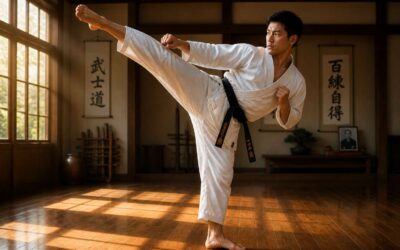
Training in martial arts shapes the soul long before it strengthens the body. Each session in the dojo teaches a Christian to practice patience under physical stress. The discipline of repeating forms or techniques builds a quiet mind. This is not mere athletics; it is character formation through purposeful repetition.
- Humility to learn from a more skilled partner.
- Temperance to stop a technique before it causes harm.
- Perseverance to return after a hard loss.
This preparation changes how conflict feels. The body learns to move without panic, while the mind practices restraint under pressure. Regular sparring teaches a person to absorb aggression without returning it in kind. That is the essence of self defense as a christian, where physical readiness coexists with spiritual discernment.
Responsible Firearms Ownership and Stewardship
A firearm in the wrong hands is a liability, not a defense. Owning one as a believer requires rigorous training and sober stewardship. Responsible firearms ownership is a discipline, not a hobby.
Stewardship means your weapon stays ready but never eager. Regular maintenance prevents failures, and honest self assessment keeps pride in check. I inspect my own motives before I check the magazine.
- Practice drawing and firing under qualified instruction
- Store the firearm in a locked safe away from children
- Review South African firearms laws and renewal dates yearly
This is self defense as a christian, where preparation and mercy hold equal weight. A trained hand still answers to a surrendered will.
Situational Awareness and the Virtue of Prudence
Training for self defense as a christian is not a single course. It involves repetition, muscle memory, and honest feedback. I schedule monthly range sessions, but the real work happens in quiet drills where I rehearse threat recognition. Situational awareness is the virtuous habit of noticing before acting. Prudence asks me to observe the room, to see exits, to notice the man who stands too close in a queue.
- Observe body language without staring
- Identify alternate exits in every building
- Trust the unease that quickens your pulse
That unease is discernment, not fear! In South Africa, where alertness is a daily survival skill, my eyes and ears serve my neighbor’s safety before my own comfort.
Mental and Spiritual Readiness for Crisis
Training the body means little if the mind and spirit are unready. In South Africa, crisis arrives without warning. I have learned that mental readiness for self defense as a christian begins long before any threat appears. It starts with a settled conviction that God has placed me here for such a time as this.
Spiritual preparation involves regular prayer for discernment and courage. It also means memorizing Scripture that steadies the heart when adrenaline surges. The mind must rehearse its response to chaos, and the spirit must rest in the knowledge that God remains sovereign even in violence.
- Pray through the day before it begins
- Meditate on Psalms that speak of refuge
- Practice breathing to keep panic from taking hold
This daily rhythm builds a resilience that no drill can replace. When the moment comes, my response must be measured by grace and guided by a clear conscience. That is the true essence of preparedness.
Physical Fitness and the Stewardship of the Body
Paul called the body a temple of the Holy Spirit. That designation carries practical weight when you understand that physical readiness is part of your duty before God. A body that is weak, slow, or exhausted cannot shield anyone.
My own fitness routine in South Africa shifted when I realised that every push-up and every trail run was an act of worship. Stewardship of the body means keeping it capable of responding when crisis erupts without warning.
- Strength training to maintain the capacity to shield or move a loved one
- Cardiovascular endurance to think clearly while your heart pounds
- Flexibility to navigate close quarters safely
This is not vanity or obsession with appearance. It is preparation for the moment when you may be the only protector present. Self defense as a christian means treating fitness as faithful maintenance of the temple God entrusted to you.
Practicing De-Escalation in Everyday Encounters
De-escalation is a discipline we can practice daily. In South Africa, tension can surface during routine errands. A calm word often prevents a physical clash. I remember a near altercation over parking in Johannesburg. My instinct was to argue, but I paused and looked at the man’s eyes. That pause changed everything. Self defense as a christian includes this kind of self-control. It means seeking peace while staying alert to danger.
Training for preparedness involves rehearsing conversations as much as physical responses. When you are provoked, your training either speaks or stays silent. Some situations call for open hands and a steady voice. Others require a quiet exit. Every encounter becomes a chance to honor Christ through measured action.
Responding to Conflict with Grace and Strength
De-Escalation Strategies Rooted in Humility
Confronting an angry neighbour tests your theology in ways a Sunday sermon never will. In that moment, self defense as a christian begins with a quiet surrender of ego. Humility isn’t cowardice; it’s the deliberate choice to lower your voice before raising your hands. I’ve seen a slow breath and an open palm defuse more tension than a sharp retort. Strength here means holding your ground without proving you’re right. It’s the discipline to listen, acknowledge the other’s pain, and offer a way out without shame.
Here’s what that practice looks like:
- Soften your posture to signal non-threat
- Use the other person’s name to re-humanise the moment
- Ask a genuine question to shift the focus from attack to understanding
Each step demands more courage than throwing a punch. That’s the paradoxical power of Christian self defense!
The Role of Forgiveness After an Attack
After the physical threat recedes, the harder battlefield begins. Forgiveness after an attack feels like capitulation, yet it is the strongest stance in self defense as a christian. It does not erase legal consequences or the memory of the violence. It detaches your soul from the violence itself.
Grace does not pretend the wound does not exist. It refuses to let injury define your future. In South African communities, fear can become bitterness. You can hold someone accountable through lawful means while releasing the desire for revenge. This is the strength that rebuilds. It is the final move in self defense as a christian.
The attacker stole your sense of safety. Forgiveness steals back your identity. It is a discipline, not a feeling. You speak the words before you feel them. You pray for the grace to mean them. Each day, you choose not to rehearse the assault.
Welcoming Community Conversations on Safety and Security
When neighbours gather to discuss safety, the conversation often falters at the threshold of fear. A community that speaks honestly about crime without succumbing to panic creates space for practical wisdom. In these exchanges, self defense as a christian emerges not as a doctrine, but as a shared posture of grace and strength.
Grace listens before it acts. Strength acknowledges the reality of threat. Together, they allow residents to explore de-escalation tactics, neighbourhood watch protocols, and support systems for trauma survivors. The church can host these dialogues, offering hospitality rather than prescriptions.
- Grace asks questions instead of dismissing concerns.
- Strength sets boundaries without hostility.
Such meetings transform abstract principles into communal habits. They remind us that safety is not a solitary achievement. It is cultivated together, one conversation at a time.
Legal and Moral Accountability After a Defensive Act
After a defensive act, the adrenaline fades into a quiet reckoning. Grace and strength now serve a different purpose: honest reflection. In South Africa, legal accountability demands a precise record of events, evidence of proportionality, and full cooperation with authorities. Moral accountability reaches deeper. It asks whether the response embodied Christ’s character, not merely the law’s requirements.
Self defense as a christian does not end when the threat subsides. It continues in how we pursue reconciliation, support the wounded, and examine our hearts for traces of vengeance. The law scrutinises actions; the gospel scrutinises motives. Both require courage. That courage, I believe, is the true measure of our faith in the aftermath.
Healing and Trauma Care for the Christian Defender
Self defense as a christian leaves a mark far deeper than the physical. The surge of adrenaline fades, leaving behind a nervous system in disarray. Responding to conflict with grace and strength means the defender must now face an internal ordeal. Trauma care is not a luxury; it is a necessary act of stewardship for the mind and body.
Healing requires honest recognition of the psychological cost. The defender needs space to process the event without shame. This often means seeking professional help or walking through trusted community support. Scripture calls this bearing one another’s burdens.
- The lingering hypervigilance that makes daily life feel hazardous.
- The emotional exhaustion that follows a sustained defensive encounter.
Grace extends into recovery. It involves rebuilding a sense of safety through deliberate rest and reflection. The strength used to protect life now must be used to mend your own.


0 Comments