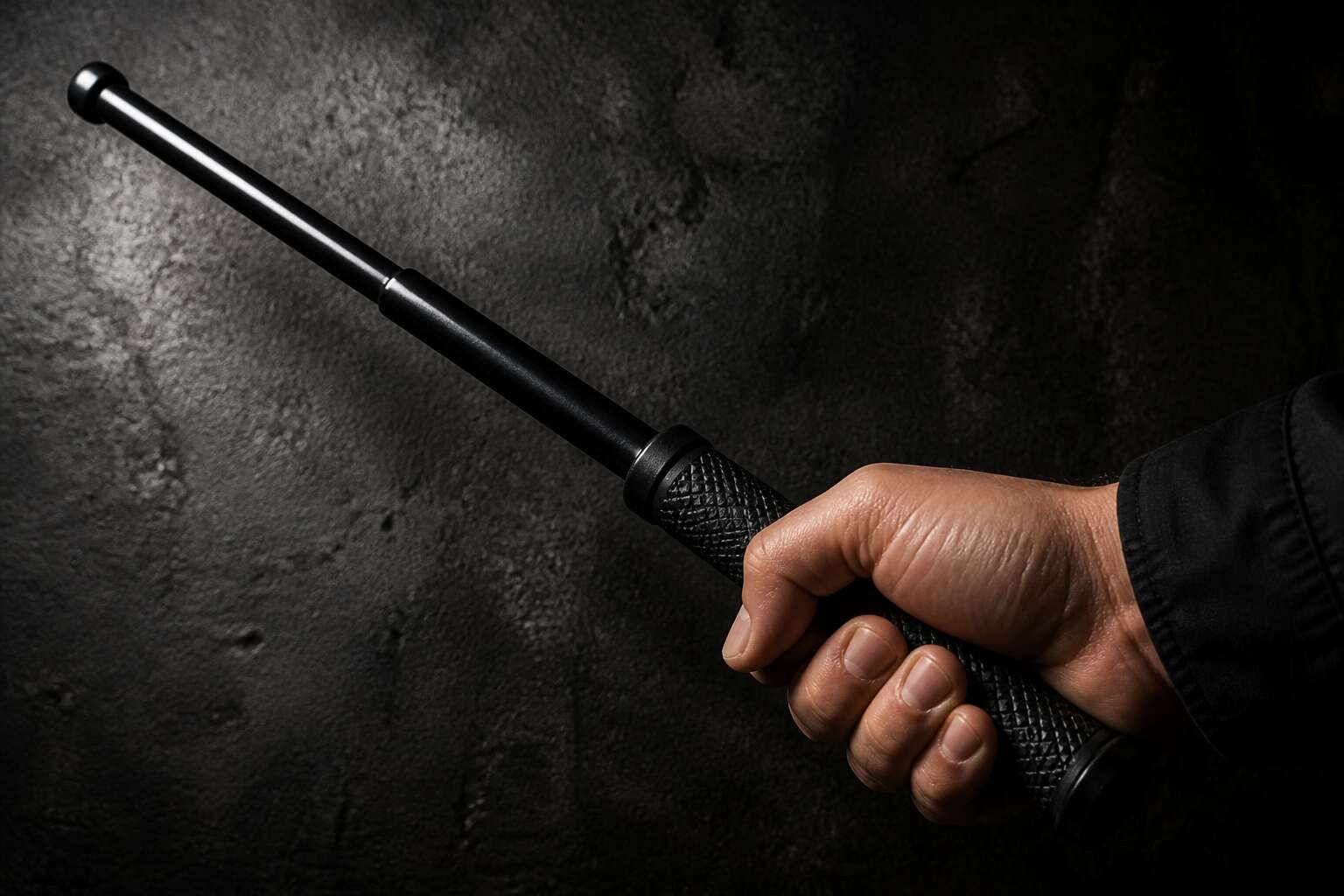
The Basics of Collapsible Impact Tools
What They Are and How They Work
A typical assault in a South African city lasts under five seconds. The self defense extending baton compresses your response into that window. This collapsible impact tool uses telescoping steel segments that lock together by friction, extending your reach by half a metre with a single snap of the wrist. The mechanics rely on precise tolerances. When deployed, the tapered shafts wedge into a solid rod.
Retraction is straightforward, a sharp downward strike against a curb or boot heel collapses the tool back to a palm sized grip. Consider the operational benefits!
- The hardened tip delivers a focused point of impact.
- The locking tension holds firm under dynamic stress.
- The compact storage fits inside a locked glovebox.
In my experience, training with this tool is physical. You must rehearse the deployment stroke until it is reflexive. Holding a self defense extending baton alters your reach and stance. It is an engineering solution addressing a visceral need for personal safety in South Africa.
Materials and Build Quality
A self defense extending baton must survive repeated impacts without bending. Most reputable models use heat treated steel for the telescoping shafts. This treatment raises yield strength while maintaining springiness. Aluminium alloys appear in grips and collars, offering a lighter weight without sacrificing rigidity. The polymer grip is overmolded with a textured pattern for traction.
Key materials:
- Heat treated C45 steel for shafts
- 6061 aluminium for locking collar
- Glass reinforced nylon for grip
Surface finish matters. Hard anodized aluminium resists scratches. Black oxide on steel prevents rust. Tolerances between segments must lock firmly yet deploy quickly. I have seen cheap batons with sloppy joints that collapse under pressure. A quality self defense extending baton has a solid feel when extended. That is the standard.
Variations in Length and Grip
Most people overlook how length and grip shape dictate the behavior of a self defense extending baton. A change of even three inches alters your reach and swing arc, which affects your ability to keep an attacker at bay. Common lengths run from 16 inches for discreet pocket carry to 26 inches for maximum defensive coverage. The 21 inch version offers a middle ground.
Grip design matters equally. A smooth, straight handle allows quick rotation. A textured, contoured handle prevents the baton from sliding during a violent encounter. Some grips feature a flared butt cap for a secondary striking surface.
- 16 inch: compact, deploys fast, short reach
- 21 inch: standard for general self defense
- 26 inch: longer reach, heavier swing, harder to conceal
Your physical build and environment guide the selection. I always recommend testing the self defense extending baton with your dominant hand before committing.
Understanding Locking Mechanisms
Most baton failures happen at the lock, not the shaft. A self defense extending baton is only as reliable as the mechanism that holds it open. A weak lock turns your strike into a disappointing collapse. South African users face humid coastal air and dusty inland conditions, both of which punish poorly sealed mechanisms.
Locking mechanisms fall into three camps:
– Friction locks: tapered segments wedge together on the swing, simple and robust
– Lever locks: a spring loaded catch engages near the tip, faster to release
– Button locks: a release sits near the handle, easy to collapse one handed
The friction lock remains the standard on duty batons. It demands a sharp wrist snap to seat properly. The lever lock suits those who want positive engagement without guesswork.
Legal Landscape and Responsible Carry
Local Laws and Restrictions
Carrying a self defense extending baton in South Africa requires knowledge of the Dangerous Weapons Act. Police have discretion under this act, and your intent shapes their response. A 2022 legal review found that courts often distinguish between concealed carry and visible carry. Your duty starts with local laws. Municipalities like Durban enforce stricter rules than rural districts.
Here is what you should check:
– Whether your city requires a permit for any expandable baton.
– Whether open carry is treated differently from concealed carry.
– Whether private security regulations limit your use.
A baton in a vehicle is often viewed as less threatening than one on your hip. The legal landscape shifts quickly. A self defense extending baton is a lawful item, but only when your actions stay within the law.
Use of Force Principles
The moment you deploy a self defense extending baton, the legal narrative shifts from possession to action. South African courts assess proportionality strictly. Your response must match the threat level, not exceed it. A baton swing after a threat has retreated is aggression, not defense.
Responsible carry begins with your own threshold for force. That means understanding when to disengage. The law expects you to use the minimum necessary. If you have a clear path to exit, take it. This is not cowardice; it is the legal standard. Certain principles govern your actions every time you carry:
- Assess the level of imminent threat.
- Define your escape route before engaging.
- Stop applying force as soon as the threat ends.
Each action you take becomes evidence. Your training and your restraint, when paired with a legally carried self defense extending baton, are the only things standing between a lawful defense and a criminal charge.
Training Requirements
South Africa’s courts treat a self defense extending baton as a tool of last resort, and the burden of proving restraint falls squarely on the carrier.
Responsible carry training requirements extend beyond simple handling. They encompass judgement, situational awareness, and the moral stamina to walk away. I have yet to meet a responsible carrier who regrets a documented course of instruction, and a magistrate will notice that discipline!
- Escalation and de-escalation role plays
- Legal use of force frameworks
- Stress inoculation drills
Each element builds a picture of intentionality. The baton becomes defensible only when your conduct before, during, and after the incident aligns with established legal norms.
Storage and Transportation
The legal landscape in South Africa demands more than lawful purchase. A self defense extending baton carried in a glove box or backpack is still a weapon in transit. Courts examine how you store and transport it, not just where you bought it.
Consider this: a baton left visible on a car seat invites questions. A self defense extending baton secured in a locked compartment with your licence nearby tells a different story. Storage signals intent!
Transportation rules follow similar logic. When moving between locations, keep the baton inaccessible. That means:
– Not in a door pocket
– Not under a loose jacket
– Not in a handbag with easy zip access
Your carry routine should reflect the same discipline as your training. I have seen too many otherwise responsible owners undo themselves at the storage stage. A magistrate assessing a case will look at whether your storage and transport choices match someone who understands restraint.
Potential Legal Consequences
In South African courtrooms, the self defense extending baton is never a neutral object. Magistrates examine how a person handled it before the incident, during the confrontation, and after the threat ended. A record of disciplined carry supports a lawful self defense argument. A habit of casual display or careless access creates an alternative story for the prosecution.
The potential legal consequences include assault charges, fines, imprisonment, and loss of professional licences. Civil damages may follow if a court finds the force disproportionate. The legal landscape rewards restraint because it gives the court evidence of intent. The same self defense extending baton that protects a responsible owner can condemn a reckless one. Responsible carry is not a performance; it is the primary evidence in your favour.
Choosing Your Personal Protection Tool
Weight and Balance
A baton that feels heavy in the hand will slow your response. The fulcrum of the tool, where the weight settles, determines how naturally it swings. A poorly balanced self defense extending baton fights you before you ever face a threat.
Consider the distribution. A tip-heavy design delivers more striking force but demands stronger wrists. A handle-heavy configuration offers control but sacrifices reach. Steel collars add durability and shift the centre of gravity. Aluminium cores lighten the load but reduce momentum.
- The weight in a holster versus the weight in your hand changes your perception
- Humidity and heat affect grip, altering the effective balance
- Gloves, if worn, shift how the centre of gravity feels
Your body type, daily carry habits, and typical environment in South Africa all matter when choosing a self defense extending baton. A heavier baton on a hot day in Johannesburg becomes a burden. A lighter one may lack the stopping power you need.
Grip Comfort and Retention
A baton that slips is worse than no baton at all. The grip is where trust begins, and in South Africa, where heat and humidity test your equipment daily, comfort is not a luxury.
Your self defense extending baton should feel as though it belongs in your hand. Textured handles, whether machined or rubberised, provide purchase without punishing your skin during a long carry. Retention works alongside comfort to keep the baton secure in its holster until you deliberately draw it.
Think about the moments between threats. Reaching into a car, climbing stairs, unlocking a gate. A handle that shifts or rotates during these mundane actions becomes a distraction. It should sit firm, neither digging into your side nor rattling loose.
The right grip is personal. Hand size, gloves, and daily routine all shape the decision.
Quick Deployment Mechanisms
In a blur of movement, the first second decides everything. Your self defense extending baton is only useful if it clears the holster and locks before a threat closes. Deployment mechanisms separate a reliable tool from a cumbersome weight.
A flick deployment uses centrifugal force, snapping each segment outward as your wrist rotates. A push button model releases a coiled spring, requiring less arm travel. A lever operated system unfolds the baton in deliberate steps.
Three common deployment actions:
– Snap and flick, demanding a firm wrist.
– Press and extend, using a thumb button.
– Pull and slide, extending the segments manually.
Each suits different body types and clothing. A thick jacket can snag a button. A damp palm changes the purchase on a lever. The best self defense extending baton for you is the one you can draw while watching an attacker, not your belt.
Holsters and Carrying Options
A self defense extending baton deserves a carry system that matches your daily routine. In Johannesburg or Cape Town, a baton on a belt loop draws stares; a horizontal pouch under a shirt stays discreet. The holster must hold firm in a sprint, yet release smoothly.
Consider your dominant hand and how you sit, drive, and bend. A cross draw works for seated drivers. A forward cant suits open carry. Dresses suit thigh rigs or ankle holsters, though retrieval takes practice. I have seen batons end up in glove boxes after one week.
- Nylon pouches: quiet, but wear against the hip.
- Kydex holsters: rigid, fast draw, but click audibly.
- Leather cases: mould to shape, but stretch over time.
Match retention to your environment. A magnetic closure beats velcro when silence matters. Test every carry position in motion, because a self defense extending baton is only as good as its accessibility.
Budget vs. Premium Models
Most buyers in South Africa spend under R300 on a self defense extending baton, then replace it within a year. That cost exceeds a premium model bought once. Budget batons use softer steel and looser locks. They can extend during a sprint or collapse on impact. Premium models cost more, but the alloy and lock tolerance are tested. I have seen a R150 baton bend on a car door. The same hit barely marked a premium shaft.
The difference shows up in daily carry:
- Cheap steel dents and sticks.
- Mid range balances weight and price.
- High end holds up to repeated strikes.
Your life is not a bargain bin! That tool is a serious piece of gear.
Testing Before Purchase
Before you hand over your hard earned rand, feel the weight of that steel in your palm. The self defense extending baton should feel solid and reassuring. I have watched buyers test a flick in the shop, then find a wobbly joint on the first real swing. That is the moment truth arrives!
Take it outside. Find an old tyre or brick wall. Strike with controlled force. Listen for a dull thud, not a rattle. Check the lock under stress. A baton that fails here will fail you in the dark.
When I test, I do this:
- Extend and retract it twenty times to feel the friction.
- Strike a hard object three times at full extension.
- Shake it to test for accidental collapse.
That routine has saved me from buying junk twice! The right self defense extending baton rewards patience. The wrong one punishes haste.
Mastering Defensive Baton Techniques
Stances and Grips
In a confrontation, the self defense extending baton is only as effective as the foundation beneath you. Your stance must be balanced, with weight distributed evenly and knees slightly bent. This allows rapid movement without telegraphing intent. Grip matters equally. A loose hold robs power, while a death grip tires the forearm quickly.
Consider these grip variations for your self defense extending baton:
- The standard grip, thumb along the shaft, for control.
- The reverse grip, for close quarters and hooking motions.
- The icepick grip, useful for downward strikes.
Each stance and grip combination alters your reach and reaction time. Practice transitioning until the motions feel instinctive. In South Africa, where personal safety is a pressing concern, mastering these fundamentals is non-negotiable.
Striking Zones and Targets
A thrown punch leaves the ribs exposed for half a second. That window is your opportunity. A self defense extending baton should target soft tissue and joints, not armored skulls. The temple and the collarbone offer quick effect. The knee, struck from the side, can end a chase before it begins.
Target selection follows a simple order.
- The lateral knee for instability.
- The radial nerve on the forearm for weapon drops.
- The iliac crest for a sharp, disabling sting.
Striking the torso through heavy clothing wastes energy. Aim for bone near the surface or nerve clusters. Short, snapped strikes outperform wild swings. Practice on a padded dummy to learn distance. South African conditions demand efficiency. Every swing must count.
Blocking and Parrying
Blocking with a self defense extending baton differs from parrying. A block meets force with force. A parry redirects it. The baton’s rigid shaft absorbs a strike aimed at your head or torso, but only if you angle it correctly. Hold the baton at a 45 degree angle across your body, not parallel to the incoming blow.
Parrying requires less strength. You deflect the attacker’s limb just enough to move it off its line. A half step forward makes parrying easier, as you meet the strike before it gains full momentum.
For high strikes, raise the baton with both hands, one near the grip, one near the tip. For low strikes, drop the baton downward and outward while keeping your elbows tucked. A self defense extending baton gives you reach, but blocking depends on positioning, not power.
Retention and Disarming Prevention
Retention keeps your self defense extending baton in your hand and out of an attacker’s. The moment someone seizes it, the weapon becomes a threat to you.
Begin with a grip that never compromises. Thumb locks over fingers, wrist stays neutral. A bent wrist can be twisted. If a hand closes over the shaft, do not pull away; pulling starts a contest of strength. Instead, rotate the baton toward the attacker’s thumb. Common retention failures include:
- a wrist that bends too easily,
- a shaft held too close to the body,
- an idle free hand.
Disarming prevention requires watching the other hand. A disarm rarely comes from the hand you see. It comes from a second hand that traps yours. A half step back converts that leverage into distance. Your self defense extending baton is a tool, not a trophy; letting go is sometimes control.
Practice Drills and Safety
Practice turns technique into reflex. The self defense extending baton demands deliberate repetition before it becomes reliable under stress. Start with slow, controlled strikes on a padded target. Speed follows form, never the reverse. Each session should include:
- Deployment from the carry position
- Forward and downward strikes
- Figure-eight transitions between angles
- Recovery back to a ready stance
Safety is non negotiable. Wear protective eyewear and gloves. Drill with a partner who holds a training baton, never the real one. A steel self defense extending baton can fracture bone. Treat every session with that weight. In South Africa, where private security response times vary greatly, your proficiency determines your outcome. Build muscle memory through consistent repetition. One focused hour weekly outperforms sporadic marathon sessions. Train with intention, audit your grip, and respect the tool’s destructive capacity.
Follow-Up Movements
A single strike with a self defense extending baton is rarely the final act. In South Africa, the seconds following your most powerful hit often decide the entire encounter. Your follow-up movement must immediately close the gap or widen it.
Do not freeze to admire your work. Pivot your base foot to face the new angle. Slide your rear foot backward to widen your stance, allowing a second strike or a clean exit. Keep the baton in a high guard, not resting on your shoulder.
A solid follow-up drill for the self defense extending baton includes:
- Resetting to an outside line after a downward strike
- Executing a rear pivot to escape a headlock attempt
- Transitioning to a low carry while scanning for accomplices
Maintenance and Care
Cleaning and Lubrication
Keeping your self defense extending baton in working order requires more than an occasional wipe down. Residual moisture, dust, and even the oils from your palms will work their way into the telescoping segments. Over time, that buildup becomes abrasive and causes the locking mechanism to bind or fail entirely.
A light cleaning every few weeks is usually enough for most users. Disassemble the baton if the design allows, then wipe each section with a lint free cloth and a mild solvent. Focus on the friction points where the collars meet.
- Use a silicone based lubricant rather than heavy grease.
- Apply a thin film to the outside of the inner shafts only.
- Allow the lubricant to settle before reassembling.
Excess oil collects grit and accelerates wear. A few drops of quality oil, applied sparingly, keep the action smooth without attracting debris.
Inspecting for Wear and Tear
Inspection is where most baton owners get lazy. You cannot spot a stress fracture from across the room, and a self defense extending baton that fails mid swing is just an expensive stick. Give the weapon a proper once over every month. Check the tip, the handle, and every collar in between for cracks, rust pits, or discoloration that suggests metal fatigue.
- Hold each segment and twist gently. Any give or rotation means the locking surfaces have worn down.
- Extend the baton and listen for a dull thud instead of a crisp click. That sound change is a warning.
Pay attention to the tip. A damaged tip affects impact and can bend the first shaft. Swap out questionable parts immediately. A self defense extending baton in South Africa faces heat, dust, and hard use. Small issues become expensive failures later.
Replacing Parts
Replacing parts on a self defense extending baton is straightforward, but it demands precision. The tip carries the brunt of every impact, so a flattened or chipped one goes straight to the bin. Collars wear down from repeated extension. Once the locking surfaces lose their bite, the baton collapses mid swing.
Manufacturers sell individual components for most models. Springs, locking pins, and end caps are inexpensive. A self defense extending baton in South Africa faces intense heat, abrasive dust, and rapid temperature shifts. These conditions shorten component life. Swapping a sluggish spring or a worn collar restores reliable deployment.
- Exact model and generation matching for every component
- Manufacturer approved parts over generic substitutes
- Fresh components checked for burrs before installation
A mismatched tip or collar creates more problems than the worn part it replaces. The locking sequence depends on precise tolerances across all segments.
Legal Compliance After Modifications
Changing a component on a self defense extending baton shifts its legal standing. In South Africa, the law looks at function, not intention. A modified tip or a stronger spring can push a baton into a category that requires a licence. I have seen owners assume that swapping a part is invisible to the law. It is not. Keep the original parts. Store the receipt from the manufacturer. If an officer inspects the baton, these items matter more than any explanation.
Consider these questions before you alter anything:
- Does the modified length still fall within local limits?
- Does the replacement part classify the baton as a prohibited weapon?
- Can you prove the provenance of every swapped component?
A baton that was compliant yesterday may not be compliant tomorrow. That is the reality of ownership. You carry the baton. You carry the consequences.
Training With Your Baton
Owning a self defense extending baton in South Africa means training must include care rituals alongside strike practice. I watch owners pour hours into speed and power while ignoring the quiet habits that keep a baton dependable. The best practitioners treat maintenance as part of their skill set, not an afterthought.
One useful approach pairs deployment drills with a short inspection sequence:
- Cycle the locking mechanism open and closed several times.
- Feel for unusual friction or play along each shaft segment.
- Check the tip for burrs left by hard impacts.
This combined routine builds a tactile memory of how the self defense extending baton should respond. When you know its normal resistance and sound, you catch small changes early. That awareness becomes a quiet reflex, and it stays with you during any encounter.


0 Comments