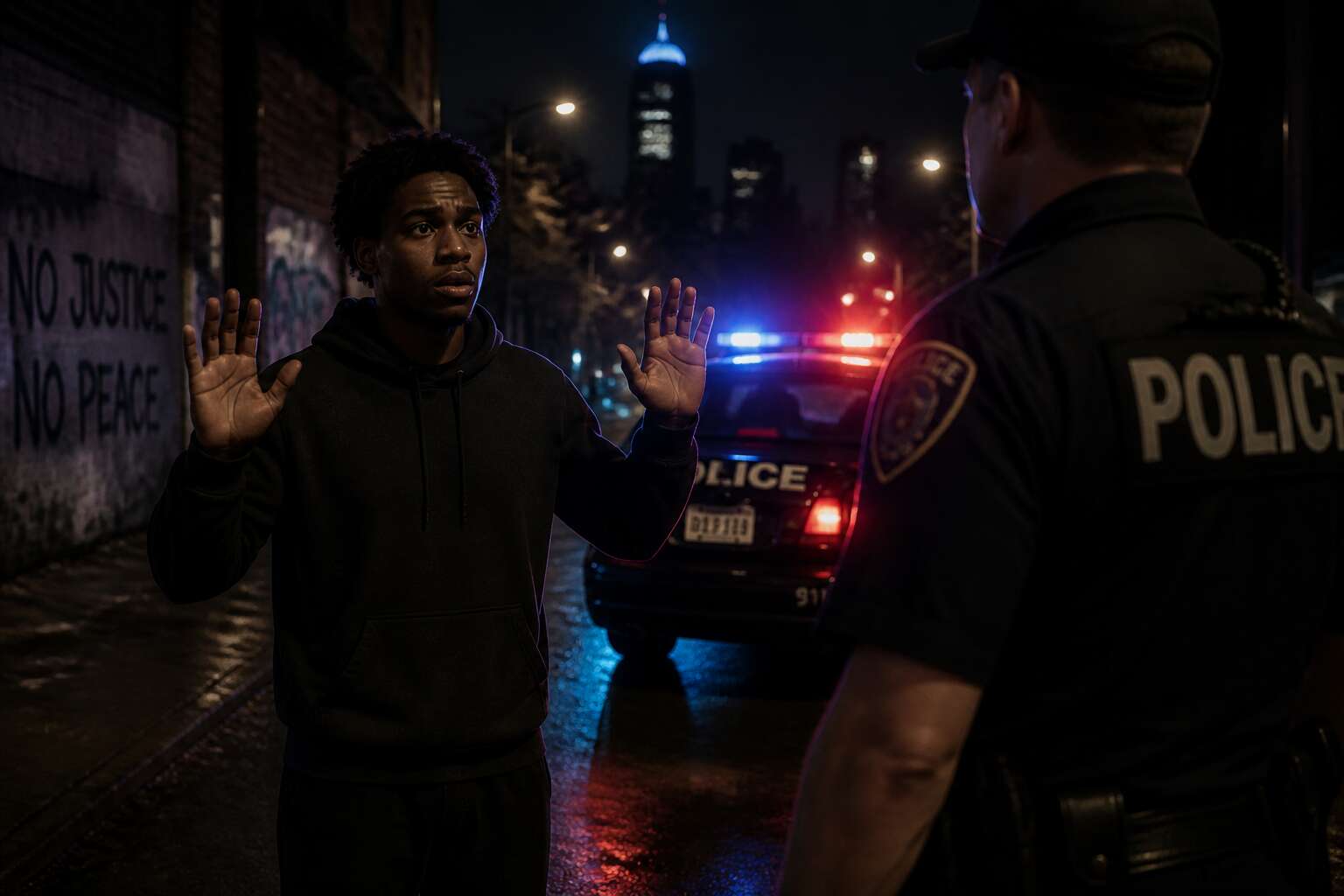
Legal Framework of Self-Defense
Understanding Self-Defense as an Affirmative Defense
The average person might assume that raising a hand to a police officer automatically seals a conviction, but the legal framework of self defense operates on a far more nuanced axis. In South African law, self defense exists as an affirmative defense, meaning you acknowledge the physical act occurred, but you argue it was justified to protect yourself from an imminent unlawful attack. That distinction is crucial.
When the attacker is a police officer, the dynamics shift. The officer’s conduct must itself be lawful for their authority to hold weight. If the officer uses force beyond what the situation demands, their act becomes unlawful, and the normal rules of private defense can apply.
To successfully raise this defense, a court typically examines several factors. The defense must be proportional to the threat and the danger must be imminent.
– Was the attack already underway or immediately threatening?
– Was the force used the least harmful way to avert the danger?
– Did you genuinely believe the force was necessary?
The question of can you self defense against police ultimately hinges on these elements. It is not a blanket excuse. It is a tightly scoped legal argument, and the burden of proof rests on you to present sufficient evidence to create reasonable doubt. The court must believe your response was a reflex to danger, not a deliberate act of defiance.
Reasonable Force Standards in Civilian Contexts
Every action movie features a hero slapping a cop. In South African courtrooms, that scene typically ends with a verdict, not applause. The question of can you self defense against police starts with a sobering reality: reasonable force standards follow civilian logic, not Hollywood logic. You can raise self defense, but only within the boundaries of proportionality. The law does not demand a perfect calculation. It demands a sane one.
- The severity of the threat you perceived.
- The availability of safer alternatives, such as retreat.
- The officer’s own conduct leading to the incident.
Your response must be the least harmful option capable of ending the threat. This baseline separates justified action from dramatic overreach. When you wonder can you self defense against police, remember that reasonable force in civilian contexts means your instinct matters, but so does your judgment.
Duty to Retreat vs Stand Your Ground Principles
Ask a South African criminal lawyer about stand your ground and you will get a curt answer: the doctrine does not exist here. Our common law demands a more nuanced evaluation. When you ask can you self defense against police, the legal framework forces you to answer two questions. Did you try to escape? Would retreat have made you safer?
The duty to retreat is not absolute. It only crystallises when a safe avenue exists. If you are cornered or trapped, the law accepts that you may stand firm. The officer’s statutory authority changes the analysis. You cannot invoke stand your ground to resist a lawful arrest.
- Retreat is compulsory only when it is reasonably possible.
- Holding your ground is defensible only after the possibility of retreat has been exhausted.
The court reconstructs your split second decision through a factual review, asking what any ordinary person would have done with the same information.
Distinguishing Police Authority from Civilian Encounters
The Lawful Use of Force by Law Enforcement
Can you self defense against police? The question depends on how the law views an officer’s authority. In South Africa, that authority is different from a civilian’s right to defend. The lawful use of force by law enforcement is governed by necessity and proportionality, tied to the officer’s duty to arrest or protect. When you resist, the law measures the officer’s response against that official mandate, not your personal sense of threat.
- Use force to overcome resistance.
- Use deadly force only with an imminent threat.
- Prevent a suspect from escaping custody.
Your ability to act is severely limited when an officer stays inside those legal boundaries. If you ask can you self defense against police, the answer starts with whether that officer has exceeded their authority.
When Police Actions Cross into Excessive Force
When an officer’s conduct veers into excessive force, the legal landscape changes. Civilian encounters rest on mutual rights. Police authority rests on a statutory duty. The moment an officer abandons that duty, the distinction vanishes. Can you self defense against police become a valid response? Yes! But only when force exceeds the objective standard. A punch to a handcuffed suspect or a weapon used after surrender signals a crossed line. These actions strip away the officer’s lawful privilege. The encounter then resembles an assault by any other person. Watch for these three indicators:
- Force applied after compliance.
- Deadly force without an immediate threat.
- Punishment rather than control.
When they appear, your right to defend emerges. The courts will examine the officer’s actions first, not your fear. Your claim hinges on whether the force was objectively unreasonable.
The Concept of a Defendant’s Lawful Right to Resist
A badge is not a talisman for immunity. It is a temporary lease of authority, granted by statute. In South Africa, that lease expires the moment an officer steps beyond strict legal bounds. An unlawful arrest or brutal force transforms a sanctioned officer into a private aggressor. Your right to resist is born from this metamorphosis!
The distinction is stark. In civilian encounters, rights are mutual. With police, standing flows from lawful duty. When duty is betrayed, the power dynamic collapses. The law starts to view the officer as a common assailant. To ask can you self defense against police is to ask whether the state abandoned its rules. Thus, the concept of a defendant’s lawful right to resist becomes a concrete shield, not a theoretical fantasy.
Does can you self defense against police apply when the state acts unlawfully? Yes, but only when the officer’s privilege is extinguished by his own misconduct. Courts will scrutinize the initial legality of the police action before your reaction. The badge offers no protection when the bearer becomes the criminal.
State-Specific Statutes Governing Resistance to Arrest
Civilian encounters rest on mutual consent. Police authority rests on statutory grant. The Criminal Procedure Act dictates when force becomes permissible during arrest. The moment an officer violates those parameters, the encounter morphs into something else entirely.
South African courts have consistently held that resisting an unlawful arrest is a recognized right. The statute is national, yet judicial interpretations create meaningful distinctions across jurisdictions. These interpretations determine whether an officer’s badge still shields him from civil or criminal liability.
- The legality of the initial arrest
- The proportionality of the officer’s response
- The immediacy of the threat you faced
So can you self defense against police when the badge exceeds its lease? Only where case law and statutory interpretation align to strip the officer of protected status. Can you self defense against police during a lawful arrest? No. That distinction is the entire battleground.
Legal Consequences of Self-Defense Against Police
Criminal Charges to Expect: Assault, Battery, and Resisting Arrest
The only thing more optimistic than a civilian who tries to outwrestle an officer is that same civilian expecting courtroom mercy. In South Africa, the charges accumulate. Assault, battery, and resisting arrest form a trifecta that prosecutors adore.
The consequences are straightforward.
- Assault covers any threat or attempt to use force
- Battery covers the actual physical contact, even a defensive shove
- Resisting arrest covers any failure to submit, from a flinch to a full blow
Each charge carries its own penalties, and court sentences stack on top.
So, can you self defense against police? Legally, your answer is no, not if you value your freedom. The law expects compliance, then you file a complaint later. Take the handcuffs, not the fight.
The Impact of Qualified Immunity on Civil Lawsuits
Qualified immunity, in South African jurisprudence, manifests through statutory indemnity provisions that shield officers from personal liability. The Civilian Secretariat for Police Services logs complaints, yet civil claims against the state founder without video evidence or independent witnesses. Ask can you self defense against police and the civil courts answer with procedural barriers rather than substantive review.
Your damages claim collides with a framework engineered to protect judgment calls made in volatile moments.
- Section 3 of the Police Act governs misconduct complaints
- Regulation 8 mandates filing within six months
- Prescription periods truncate the window further
Most plaintiffs abandon litigation once legal costs eclipse potential settlements, leaving the question of can you self defense against police answered by courtroom reality: the shield holds.
Federal vs State Jurisdiction in Police-Related Claims
When a citizen raises self-defense against a police officer, the legal consequences depend heavily on which forum hears the matter first. South Africa does not have a federal system, but it does have division of jurisdiction. The Magistrates Court handles your criminal charges. The High Court addresses civil claims. The Independent Police Investigative Directorate examines the officer’s conduct. A verdict in one does not settle the question in another.
This fragmentation creates a strange social theater. You may walk free from the criminal dock, only to find the civil summons waiting at home. The phrase can you self defense against police becomes a jurisdictional gamble. In practice, the consequences are:
- Criminal acquittal without civil immunity
- IPID findings that do not bind the civil court
- Allegations that shift between assault and resisting arrest
The court’s answer changes with its identity. That is the real consequence.
Potential Aggravating Factors: Weapon Use or Prior Convictions
The moment a weapon enters the confrontation, the legal stakes rise sharply. South African courts treat weapon use as a threshold. A firearm, knife, or even a blunt object invites scrutiny of intent that a bare-handed struggle never would. Prior convictions compound this problem. The court sees a pattern, not an isolated moment of fear.
- Weapon possession during an altercation with police can trigger enhanced charges under the Criminal Procedure Act.
- Prior convictions for violence can rebut your claim of being the peaceful party.
- The prosecution will argue your history shows propensity, not panic.
Can you self defense against police with a weapon in hand? The IPID applies the same use-of-force standards to you as to the officer. Your criminal record becomes a character witness against you. The court weighs your past against your present fear. That weight often determines the outcome.
Case Precedents That Shape Outcomes
Case law in South Africa does not treat self-defense as a formula. It reads the facts through the lens of prior judgments. The question can you self defense against police often hinges on the officer’s conduct at the moment of arrest, not your intent hours earlier.
Precedents like Govender and Ex parte Minister of Justice establish that the State must prove your response was disproportionate. Courts examine whether you had an avenue to retreat or whether the officer’s actions invited the confrontation. One judgment ruled that a defendant who disengaged before using force retained a stronger claim. Another held that continuing to struggle after the officer withdrew negated self-defense entirely.
- The court reviews the officer’s body camera footage alongside your testimony.
- The court weighs your perception of threat against objective reasonableness.
Can you self defense against police? Only if precedent supports your version of events. Each ruling narrows the path forward.
Evaluating the Practical Risks and Realities
Physical Disparities: Training, Equipment, and Backup
The question ‘can you self defense against police’ fails when you weigh the physical odds. An officer trains daily in defensive tactics and weapon retention. A holster contains pepper spray,a taser,and a handgun. A radio summons immediate backup. Your body offers none of these advantages.
Consider three concrete realities in numbered order.
- Training: officers practice takedowns and escort techniques, making your natural resistance predictable.
- Equipment: body armor deflects impact,batons extend reach,and handcuffs secure wrists within seconds.
- Backup: within minutes,additional units arrive,turning a one-on-one scuffle into coordinated suppression.
In South Africa, police respond with similar force. The law presumes officer reasonableness,and resisting arrest is charged aggressively. Any self defensive motion, even deflection, becomes evidence of assault. The practical answer to whether self defense is possible here turns into a measure of risk.
Immediate Escalation Dangers and Legal Jeopardy
In South Africa, the moment your hands rise to deflect an officer’s grip, the immediate escalation danger rewrites your evening. A defensive flinch reads as an attack. Officers escalate through the force continuum within seconds, moving from verbal commands to baton strikes or takedowns. I’ve watched this unfold on dash cam footage; the speed is startling!
The legal jeopardy follows immediately. The charge sheet doesn’t record your fear. It records your motion. That single deflection becomes the foundation for assault charges and resisting arrest. The question “can you self defense against police” is a juridical quagmire because the officer’s version is presumed credible.
- Verbal command ignored
- Physical restraint initiated
- Charges filed within hours
Your practical risk isn’t the scuffle itself. It’s the permanent police record and the bail conditions that follow. The courts weight the officer’s testimony heavily. Can you self defense against police? In reality, your self defensive motion is turned into evidence of assault, and the practical answer is a measure of risk.
Situational Awareness: Identifying Genuine Threats vs Misunderstandings
Standing in the moment, your evaluation of risk must be brutally honest. Can you self defense against police? The reality is that the officer holds the lawful mandate, and your situational awareness is the only tool that might prevent a catastrophe.
Genuine threats from officers are rare, but misunderstandings are frequent. A fumbled wallet, an unclear order, a delayed response, these are not attacks. The practical risk emerges when you mistake the officer’s aggressive posture for an imminent threat. Your brain must filter environmental cues, the presence of backup, the certainty of commands. Without that filter, a routine stop becomes a charge sheet.
Alternative Non-Physical Defensive Strategies
Documenting the Incident: Recording and Evidence Collection
Memory is a fragile witness, especially after an adrenaline-charged confrontation. For South Africans questioning whether can you self defense against police could ever be justified, the only durable defense is evidence. A phone camera, held steady and unobtrusive, captures what fear distorts later.
Recording the incident builds a factual record that words alone cannot recreate. Focus on capturing details that hold legal weight:
- The officer’s badge number and vehicle identifiers
- Visible injuries photographed promptly, before swelling alters their appearance
- Witness names and contact numbers, gathered before people drift away
- The precise time, location, and environmental conditions of the encounter
These fragments form a chain of custody for your account. Without recorded proof, allegations of excessive force dissolve into competing testimonies. Documentation does not escalate tension; it preserves your credibility. When memory bends under stress, evidence remains steady and unyielding.
Verbal De-escalation Tactics During Police Encounters
When the question of can you self defense against police surfaces, most imagine physical resistance. Yet the most effective defense often begins with your voice. Verbal de-escalation is a tactical skill, not a surrender.
Keep your hands visible, speak in a low tone, and acknowledge the officer’s authority without admitting fault. Avoid sudden movements. Address the officer as “sir” or “ma’am” while asking clarifying questions.
- State your intent: “I am reaching for my ID.”
- Repeat the officer’s instructions back to confirm.
- Pause before speaking to let adrenaline settle.
These phrases build a bridge between fear and reason. In South Africa, where confrontations can spiral, a calm voice preserves your legal position. Asking can you self defense against police legally or practically, rarely wins through force. It wins through measured silence and deliberate speech.
Filing Formal Complaints and Civil Rights Claims
After the handcuffs come off, the fight can continue on paper. Filing a formal complaint with IPID or launching a civil claim transforms the question of can you self defense against police into a matter of evidence rather than adrenaline. Your statement matters more than your stance.
Consider these steps when building a complaint:
1. Obtain the officer’s badge number and name.
2. Request the case docket number.
3. Submit your statement to IPID within their prescribed timeframe.
4. Keep copies of all correspondence.
A legal claim requires a demonstrable violation. In South Africa, the Constitution and IPID Act provide avenues for accountability. Your version of events, supported by medical reports and witness statements, becomes your defensive strategy.
Contacting a Civil Rights Attorney or Legal Advocate
Physical resistance against trained officers is a losing game. Your better weapon is a phone call. Contacting a civil rights attorney or legal advocate before, during, or after an encounter creates a layer of protection that muscle cannot match.
I have seen mock trials where a defence lawyer’s mere presence changed how police testified. In South Africa, legal representation is a constitutional right under section 35. Invoke it early! Attorneys can scrutinise affidavits, file urgent applications, and negotiate with prosecutors before charges crystallise.
The work involves:
– Verifying the lawfulness of your arrest in real time.
– Demanding release of CCTV or dashcam footage.
– Ensuring IPID complaints are phrased to trigger investigation.
The question of can you self defense against police becomes irrelevant when your advocate dismantles the official narrative before it reaches a judge.
Public Accountability through Media and Community Groups
When the physical realm closes its doors, the arena of public perception opens wide. The question of can you self defense against police often misses the point: the most powerful defense is collective witness. A single voice can be dismissed, but a chorus of community scrutiny becomes a force that demands attention.
In South Africa, where community activism has a storied history, the neighborhood watch group is more than a patrolling body. It is a network of eyes and ears that can verify or challenge an officer’s account. When you channel your experience through trusted community structures, you convert a private trauma into a matter of public record. The weight of that collective memory can sway how a station commander views a complaint, and it shapes the social climate long before any trial begins.
The role of media, particularly local news outlets, operates as a different sort of shield. A journalist’s inquiry to a police spokesperson creates an administrative trail. The mere existence of that trail changes the calculus for everyone involved, from the patrol officer to the precinct chief.
Actionable steps for leveraging this dynamic:
– Document the badge number and unit details the moment it is safe.
– Share your account with a local community forum or street committee.
– Contact journalists who cover police accountability beats.
– Circulate footage to advocacy groups that track excessive force cases.
When a situation becomes public, the institutional desire to protect its own must compete with the need to protect its reputation. This tension is a strategic vulnerability. Your goal is to make the cost of a quiet cover-up higher than the cost of an internal investigation. The concept of can you self defense against police evolves, transforming from a question of physical might into a matter of narrative control.
Exercising the Right to Remain Silent and Seeking Legal Counsel
The right to remain silent is a strategic act, not a passive one. In South Africa, Section 35 of the Constitution protects this right, yet many citizens forfeit it under pressure. They speak, they explain, they justify. Every word feeds the official record.
I have witnessed cases where a single careless sentence undermined months of careful legal preparation. Legal counsel changes the confrontation entirely. The moment an attorney arrives, the dynamic shifts. You become a person with representation, not a suspect alone in a room. The question of can you self defense against police leaves the physical realm altogether. Your defense lives in procedure, in objection, in the disciplined silence your lawyer instructs you to maintain.
For anyone facing this position:
- Say nothing beyond identifying yourself.
- Request a lawyer immediately.
- Document your memory of events as soon as you are alone.
Special Considerations and Edge Cases
Plainclothes Officers and Undercover Scenarios
A plainclothes officer blurs the boundary between rescuer and predator. This is the most dangerous ground for any civilian. Without a uniform, without a marked vehicle, the officer becomes a stranger with a gun. The law still expects immediate comprehension from you, even as adrenaline floods your senses. The question of can you self defense against police becomes a gamble when the supposed officer refuses to show a warrant card or badge.
In South Africa, unmarked vehicles and civilian dress are staples of tactical units. They rely on surprise to subdue suspects. That reliance puts you in a terrifying position. Courts often side with the officer, arguing that reasonable force includes restraint during an unidentified stop.
- Verify identity from a distance, do not approach
- Keep your hands visible and make slow movements
- State your name and ask what you are accused of
The law treats your survival as secondary to the officer’s identification. So the real answer to can you self defense against police shifts with every withheld badge and every raised weapon.
Self-Defense Against Unlawful Police Entry at Home
Your home creates a different legal framework. In South Africa, police may enter without a warrant only in narrow circumstances such as hot pursuit. Any other entry is unlawful. Yet courts still demand a measured response. The question of can you self defense against police at your own threshold rarely ends in your favor.
Forced entry under a faulty warrant is a procedural violation. That violation does not strip the officer of authority. In my experience, prosecutors frame your resistance as the crime, not their illegal entry. Can you self defense against police when the entry itself was unlawful? Only if officers use extreme violence. A legal mistake does not justify physical resistance.
- Validity and visibility of the warrant
- Clarity of officer identification
- Opportunity to record from a safe distance
If officers are already inside, stand down and contest the entry later. Resistance now produces charges; restraint preserves your case!
Mental State and Belief of Imminent Danger
Your mental state at the moment of confrontation can determine whether can you self defense against police holds up in court. South African courts examine whether you genuinely believed imminent danger existed. That belief must be honest, but it also must be reasonable.
Consider an officer in plainclothes who fails to identify themselves while grabbing you. Shock and confusion might support your claim. However, if you recognised the person as police and continued fighting, your belief of danger evaporates.
Courts weigh several factors when assessing this belief:
- Whether visible weapons were drawn
- Whether officers announced their presence
- Whether you had time to process the situation
A speculative or panicked assumption does not meet the threshold. The question of can you self defense against police turns on evidence of immediate, credible threat, not your inner narrative alone. In my experience, judges demand concrete indicators, not post-hoc rationalisation.
The Role of Bystander Intervention and Witnesses
A single bystander’s testimony can rewrite the narrative. When you ask whether can you self defense against police holds up, the court will look past your account to independent observers. Their credibility often dictates the outcome. Witnesses provide a snapshot of the officer’s demeanor and your physical reactions.
Consider what a bystander can verify:
– Whether officers announced their presence before contact.
– Whether you raised your hands or attempted to comply.
– Whether the officer used a weapon without visible provocation.
– Whether the situation escalated due to your resistance or their aggression.
Their perspective carries weight because they lack a personal stake. A witness who saw plainclothes officers fail to identify themselves can substantiate your claim of imminent danger. Conversely, testimony describing your aggressive posture undermines your defense. The absence of witnesses does not destroy your case, but it forces the judge to rely on conflicting police reports. Searching for nearby security cameras or dashcam footage becomes critical. In South African courts, corroboration turns a word against word contest into a decision grounded in tangible evidence. Secure witness statements early while memories remain fresh.


0 Comments