Understanding Self-Defence Training: Core Concepts and Goals
Definition and objectives
The most powerful punch is the one you never throw. In South Africa’s vibrant streets, what is self defence training takes on a broader meaning than a quick jab; it is a discipline of awareness, restraint, and practical safety. I’ve learned that mastery begins before the first stance, with observation, timing, and a dash of prudence!
At its core, it thrives on clear concepts and purposeful goals that empower everyday life—prevention, measured response, and preserving options for the future.
- Situational awareness and risk assessment
- De-escalation and boundary setting
- Escape strategies and basic defensive skills
- Legal and ethical considerations
Practically, the aim is confidence, mobility, and composure under pressure. It is not about aggression, but about choice—choosing the safest path, disengaging when needed, and seeking help when appropriate. That is the essence of self defence training.
Fundamental principles: awareness, avoidance, and safety
The strongest defense is a calm, prepared mind! In South Africa’s dynamic streets, understanding self defence training starts with perception and the choices that follow. In short, what is self defence training? It’s a framework built around awareness, discernment, and safety.
Core concepts translate into everyday habits. The triad—watchfulness, prudent spacing, and safety-first decision making—keeps danger at the edge of perception.
- Watchfulness and reading the room
- Boundary setting and de-escalation
- Safe disengagement and seeking help
Practically, these core concepts yield confidence, mobility, and composure under pressure. The aim is choice, not aggression, enabling safer paths through daily life.
Key outcomes and skill progressions
Shadows cling to the city’s corners, and perception becomes action in a heartbeat. What is self defence training? It is a guided arc from sharpened awareness to deliberate exit strategies—an art of choosing safety over conflict. In South Africa, realism guides every drill.
It anchors clear outcomes and practical progress: confidence under pressure, mobility through space, and composure when decisions press hard. The skill ladder moves from risk noticing to boundary setting to safe disengagement.
- Key outcomes: confidence, mobility, composure
- Skill progressions: perception, decision-making, disengagement
- Practice emphasis: scenario-based drills and clear communication
Through steady practice, what seems chaotic becomes disciplined calm—the reader’s edge against the night.
Relevance across different environments
An electric hush settles when danger seems near, but preparation keeps the breath steady. what is self defence training? It’s a practical arc—from reading a space with care to choosing a safe exit—designed for real lives in South Africa’s crowded streets and quiet back roads, where red dust meets modern transit. Realism anchors every drill, turning fear into focus and uncertainty into a resolute calm.
Across environments, the aim remains the same: to stay safe while preserving dignity. Here’s how varied settings shape the approach:
- Urban spaces and public transport
- Rural and peri-urban routes
- Workplaces and daily routines
From the first class to the last drill, I’ve watched learners drift from hesitation to steadiness—breathing easier, shoulders squared, eyes more attentive. It’s not about fighting; it’s about choosing safety with humanity and leaving space where it’s possible.
Fundamental Skills in Self-Defence Training
Stance and movement basics
A single grounded stance can alter the arc of a tense moment and is often all that stands between disruption and safety. “Movement is the language of readiness,” a seasoned mentor once said, and that sentiment sticks when I contemplate what is self defence training. It begins with how you carry yourself—neutral, alert, unshakable—and extends into how you move within space.
Stance and movement basics here are less about fancy kicks and more about balance, alignment, and controlled momentum. Think of your base as a compass: your feet, hips, and spine align to keep you upright even under pressure. A poised head over the shoulders, relaxed jaw, and soft breathing help you read threats before they escalate.
- Stable base and even weight distribution
- Neutral alignment of hips and shoulders
- Breath control to stay calm
These elements illuminate the essence of what is self defence training and how it translates to real-world resilience in South Africa’s varied landscapes.
Situational awareness and threat recognition
Here, what is self defence training isn’t about brawling; it’s about perception shaping action. In South Africa’s diverse landscapes, threat recognition begins in the mind—before hands are drawn. Situational awareness means reading the space: who enters a room, where exits sit, what sounds carry. To answer what is self defence training, think of it as reading a space, sensing intent, and choosing safe options before escalation.
Consider these facets:
- Environmental cues: lighting, crowd flow, and exits
- Behavioral indicators: posture, pace, and micro-expressions
- Spatial awareness: lanes, barriers, and escape routes
- Distance management: sensing space and maintaining options
In daily life, this quiet vigilance translates into resilience—calmer commutes, mindful interactions, and safer spaces in South Africa’s bustling towns and townships.
Striking and grappling basics
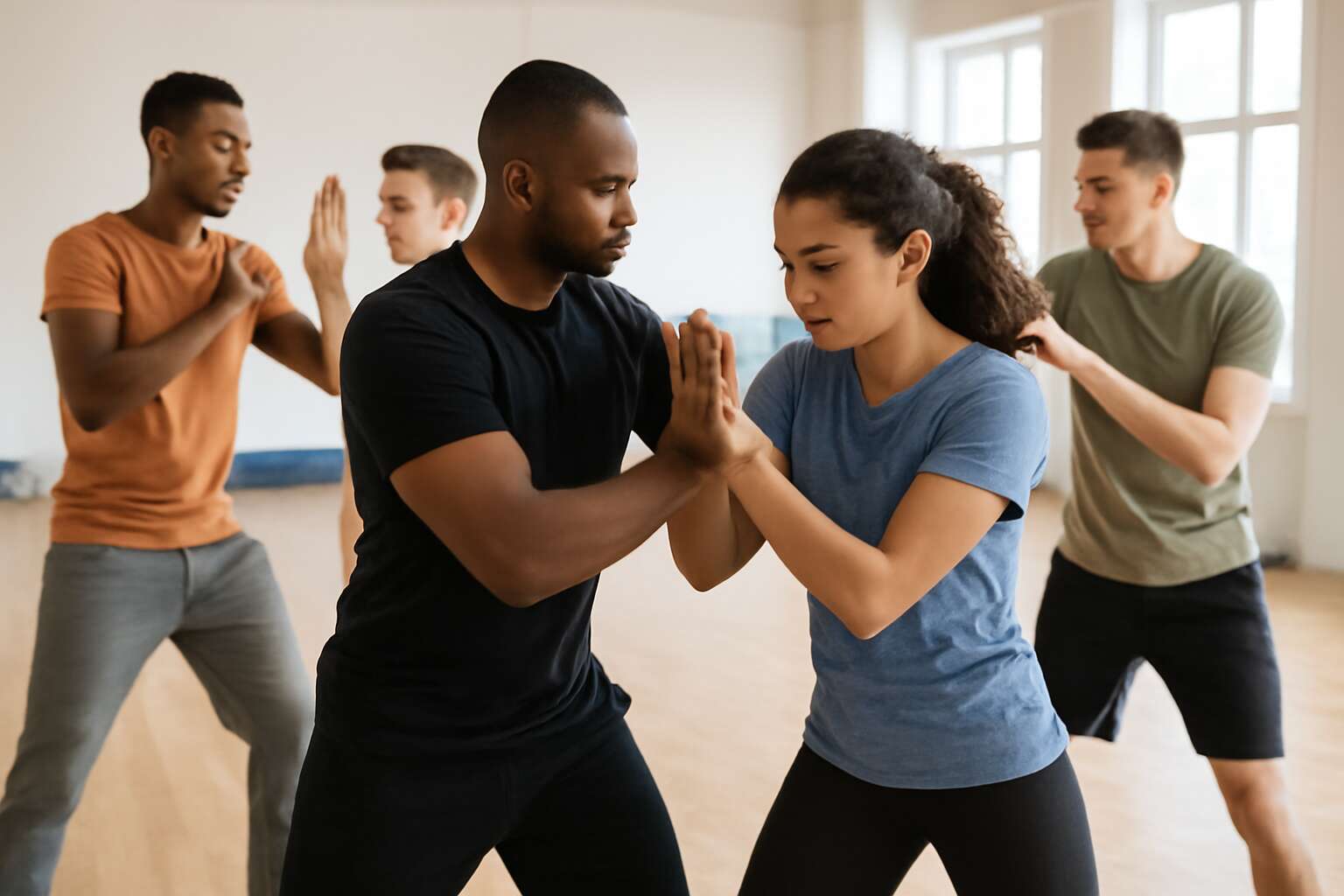
To answer what is self defence training, one begins with timing, distance, and controlled contact. It threads two core strands: striking basics—palm heel, straight punches, and low kicks designed to create space—and safe grappling basics—frames, escapes, and controlled holds that encourage disengagement with dignity rather than dominance. In the hands of a practiced practitioner, these skills read a room like a charted map before a voyage.
In training, drills fuse breath, balance, and leverage, turning instinct into measured action. In South Africa’s busy towns and townships, these fundamentals adapt to real life—from crowded ferries to late-night corridors—so a practitioner can move with quiet confidence, read momentum, and preserve options until safety is restored.
Blocking, evasion, and control techniques
Over 60% of street confrontations unfold within arm’s reach, turning breath into fear. The question “what is self defence training” sits at the heart of the practice, a disciplined choreography of blocking, evasion, and control. In South Africa’s crowded avenues and late-night corridors, practitioners plant a defensive frame, shift angles, and disengage with dignity—keeping options alive until safety returns.
Blocking, evasion, and control are not brute force but an architecture of space, rhythm, and restraint.
- Blocking: creating a barrier that slows the advance and absorbs momentum
- Evasion: using angles and distance to restore balance and flow
- Control: guiding the body toward disengagement and exit with dignity
Breathing and maintaining composure
Across South Africa’s late-night avenues, 60% of street confrontations spiral from a single breath gone ragged. In exploring what is self defence training, we discover a discipline of breath and balance, a choreography of presence that keeps options alive when fear presses in and the city sighs.
- Breath as anchor, steadying the mind when danger feels near
- Composure as shield, preserving clarity to assess and disengage
Breathing calms the tide of thought; composure steadies the frame, allowing the body to move with purpose rather than panic. In my experience, these fundamentals hold the line when options narrow and time dilates—an invisible discipline that is as much about attitude as technique!
Training Methods and Formats
Instructor-led classes and personal coaching
In South Africa’s bustling streets, safety feels like a lantern you carry through the night. A recent urban survey suggests people who invest in practical training move with more confidence on the sidewalks. The question—what is self defence training—resonates as a guided journey from awareness to poised action, a quiet spell that steadies the breath when the moment calls for it?
Instructor-led classes provide rhythm and support. An experienced teacher choreographs warmups, responsive drills, and reflective feedback, creating a reliable progression that fits busy lives—from Cape Town to Pretoria. The group energy sharpens perception and steadies the breath when pressure rises.
Personal coaching offers a bespoke path—one-on-one sessions that adapt to your timetable, location, and lifestyle, from after-work gym slots to weekend workshops at a community hall. In these sessions, instruction feels like mentorship, turning hesitation into confident, practical movement.
Scenario-based drills and sparring safety
In South Africa’s bustling streets, confidence is currency. A recent urban safety survey found that 68% of respondents report greater assurance after practical training. So, what is self defence training? It’s a pragmatic journey that blends situational context with real-world responses, rather than empty bravado. Think of it as equipping yourself with options—escape routes, calculated defense, and the calm to choose the right move when the moment arrives.
Formats are practical and city-aware, spanning from guided scenario labs to light sparring, all under strict safety guidelines.
- Scenario-based drills mirroring real street encounters
- Controlled sparring with protective gear to test timing
- Solo or partner drills designed to fit South Africa’s busy schedules
Sparring safety is non-negotiable—coaches enforce gear, rules, and progression to keep the session sharp without edge-of-seat chaos. The result? Practical movement you can trust on a weeknight walk—no capes required.
Drills for home practice and conditioning
Training methods and formats for home practice must be lean, scalable, and realistic. In busy South African lives, a compact approach builds stamina, reflexes, and muscle memory without a gym. what is self defence training, in practical terms, is an accessible toolkit: bodyweight circuits, mobility work, and optional bag or pad work if gear is available.
- Shadow movement drills focusing on stance, footwork, and situational timing
- Low-equipment routines that pair strength with reflex conditioning
- Breathing‑centric cooldowns to sustain calm and control
These formats honour city schedules and small spaces, prioritising consistency over intensity and keeping progress grounded in everyday movement. The aim is practical mobility you can trust on a late-evening walk or when navigating a bustling street.
Online resources and blended learning
In a city where late trains meet crowded sidewalks, readiness isn’t optional—it’s a daily rhythm. Training formats must ride the clock and fit compact spaces. Online resources and blended learning rise to the challenge, turning spare moments into practical motion and keeping progress visible even on a phone screen.
- On-demand video libraries you can access on mobile
- Live online coaching and Q&A sessions
- Mobile-friendly micro‑drills and printable programs
So, what is self defence training in practical terms? It is the toolbox of mobility, awareness, and reflexes delivered through video, apps, and live coaching. Online resources can include micro‑lessons, interactive drills, and supportive feedback that travels with you.
For South Africans juggling work, family, and commutes, this blended approach makes progress inevitable and approachable—wherever you are, whenever you have a moment!
Progress tracking and assessment
When pressure spikes, ready hands don’t blink. In South Africa’s crowded commutes, readiness isn’t optional—it’s a daily rhythm! So, what is self defence training? It’s a practical toolkit of mobility, awareness, and reflexes delivered in bite-sized formats that fit a busy schedule. Short, repeatable sessions ride the clock and show quick wins on a phone screen.
Tracking progress matters. Here’s how formats capture growth:
- Skill checklists and digital dashboards track weekly progress
- Periodic scenario reps test decision speed under time pressure
- Instructor notes provide concrete milestones and targeted feedback
Whether mobile-first micro-drills, live coaching, or offline practice, the method keeps progress visible and relevant to everyday spaces.
Safety, Ethics, and Legal Considerations
Safety protocols and injury prevention
In South Africa, safety isn’t left to luck—it’s built into the training syllabus. In exploring what is self defence training, we connect situational awareness with calm, measured responses. A punchy reminder: preparation reduces harm and protects bystanders, not just the practitioner.
Safety protocols and injury prevention hinge on qualified supervision, protective gear, and clear stop signals.
- Qualified supervision and vetted facilities
- Age-appropriate, progressive drills
- Protection gear and injury-prevention checks
Ethics governs interaction; respect, proportionality, and de-escalation guide every session. Legally, South Africa recognises self-defence as proportionate and imminent, with excessive force carrying serious consequences. It’s not about winning; it’s about returning home safely.
Ethical use of force and conflict resolution
What is self defence training? It’s safety-first, not street theatre. In South Africa, the aim is calm, controlled responses that protect everyone nearby. Effective training links situational awareness with measured action, because preparation reduces harm and keeps bystanders out of harm’s way.
Ethical use of force sits at the heart of every session. Proportionality, de-escalation, and accountability guide decisions when a threat appears.
- Ethical use of force aligned with proportionality
- Conflict de-escalation as default strategy
- Legal awareness and incident reporting
Legally, South Africa recognises self-defence as proportionate and imminent; excessive force carries serious consequences. The aim is to return home safely, not to win an argument.
Legal framework and post-incident steps
Shadows linger where risk walks, and South Africa’s streets can shift in a heartbeat. In the hush between footsteps, a single choice can echo through a life. So, what is self defence training but a disciplined cadence of safety, calm, and purpose?
Ethics steer every move: the decision to pull away, to wait, to seek help, or to disengage. The aim is protection without harm, with responsibility for bystanders and accountability for actions taken under pressure.
Legally, in South Africa, a self-defence response must be proportionate and imminent; straying into excessive force invites consequences. Post-incident steps matter: report to authorities, preserve evidence, seek medical and legal guidance.
- Notify authorities promptly
- Preserve the scene and your records
- Consult a lawyer and medical professional
Medical and psychological support after incidents
In South Africa’s shadowed avenues, the heartbeat can flip in a breath. What is self defence training if not a disciplined cadence of safety, ethics, and responsibility? As a mentor declares, safety is a craft, not a crash, a habit forged in awareness and intention.
Safety begins with noticing danger, choosing distance, and practicing calm under pressure. People ask what is self defence training, and the answer is a disciplined craft—boundaries, de-escalation, and the muscle memory of avoidance, control, and situational bearing.
Ethics steer every move: to disengage, to seek help, to protect others while safeguarding life.
- Respect for bystanders and the law
- De-escalation and proportionate response
Legal considerations and post-incident care: In SA, responses must be proportionate and imminent; post-incident steps include notify authorities, preserve the scene, and consult a lawyer and medical professional.
Medical and psychological support after incidents is essential: access to medical evaluation, trauma-focused counselling, and ongoing care helps restore balance and clarity.
- Medical evaluation and treatment
- Trauma counselling and psychological support
Choosing the Right Self-Defence Program
Determining goals and fitness prerequisites
Practice is protection, a crisp maxim that lands with South African immediacy. The question “what is self defence training” becomes a practical shield, not a spectacle, when a program mirrors real-life scenarios and respects your pace.
- Goals that feel meaningful (protection, confidence, or mobility) and fit your lifestyle
- Instructors with clear safety priorities and transparent coaching styles
- Class sizes and schedules that suit local transport and work rhythms
- Progression that honours your starting point
Fitness prerequisites commonly include medical clearance and a baseline level of activity, with room for gradual adaptation. When a programme invites growth while respecting boundaries, it often feels aligned with safe, sustainable progress in city-centered environments.
Program types: Krav Maga, Brazilian Jiu-Jitsu, mixed systems, etc.
In South Africa, choosing a self defence path is less about flash and more about real-world reliability, like charting a safe trail through a crowded city. what is self defence training, and how you match a program to you, matters. Krav Maga, Brazilian Jiu-Jitsu, and mixed systems each offer a distinct lens on safety and mobility.
- Krav Maga: quick, instinctive responses to street scenarios and evasive action
- Brazilian Jiu-Jitsu: leverage, balance, and control when altercations go to the ground
- Mixed systems: flexible curricula that blend striking, grappling, and awareness
Instructors who emphasize safety, gradual progression, and alignment with local rhythms help craft a training journey that fits city life and personal pace.
Factors to compare: instructor credentials, class size, facility safety
Choosing the right self-defence program in South Africa hinges on fit and reality, not hype. In cities and rural towns alike, reliability beats flash. When assessing options, consider how the training slots into your daily rhythm—commute times, work shifts, and family duties. In conversations about what is self defence training, you’ll hear that it’s a practical blend of awareness, movement, and restraint, designed for real street encounters with calm, measured responses.
- Instructor credentials: certifications, mentorship lineage, continuing safety education
- Class size and format: small groups with hands-on guidance versus larger sessions
- Facility safety: equipment upkeep, mat condition, ventilation, and clear emergency procedures
Look for instructors who bring safe teaching rhythms and practical feedback. Then weigh class size: smaller groups offer more hands-on guidance; larger classes can build community but stretch attention. Facility safety is non-negotiable: clean mats, visible exits, proper lighting, and clear emergency protocols.
Trial classes and what to ask
Choosing a self-defence path should feel like finding a trustworthy compass, not chasing a flashy map. What is self defence training? It’s turning fear into focus—practical, real-world learning earned through progressive drills. Trial classes offer a mirror: pace, teaching rhythm, and the safety culture you’ll inhabit. In South Africa, reliability beats hype; see how the practice slots into daily life, from commutes to family duties.
During your trial, you can ask:
- What does a typical trial class look like, and how is feedback delivered?
- How is progress tracked during the trial, and what milestones should you expect?
- What training paths follow the trial—small groups, private coaching, or blended formats?
Walk away with a sense that your choice resonates, fitting your daily rhythm and your safety. If you ask what is self defence training, you’ll sense the difference between hype and habit.
Accessibility and ongoing support
Accessibility is the hinge on which self-defence training swings, especially amid South Africa’s jam-packed schedules. The right program meets you where you are—gym, suburb, or online—without demanding an unholy sacrifice of your daily duties. What is self defence training? It’s practical, real-world learning earned through progressive drills, with safety and feedback woven in.
Accessibility and ongoing support aren’t afterthoughts; they’re the training itself. To optimise your experience, consider the following factors:
- Convenient location and transit options
- Flexible timetables, with catch-up sessions and make-ups
- Transparent pricing and beginner-friendly onboarding
Moreover, ongoing support keeps you progressing: regular progress checks, modular refreshers, access to coaches for post-session feedback, and a pathway to more advanced skills. That pairing sustains momentum without burnout.



0 Comments